A low carb diet for beginners
 , medical review by Dr. Michael Tamber, MD
 Evidence based
Studies show that low carb diets can result in weight loss and improved health markers.1 These diets have been in common use for decades and are recommended by many doctors.2 Best yet, there’s usually no need to count calories or use special products. All you need to do is eat whole foods that make for a complete, nutritious, and filling diet.3
Learn more about low carb and how to use it for your personal goals below.

Or watch a summary of the guide in this video:
Key takeaways
What is a low carb diet?On a low carb diet, you eat fewer carbohydrates and a higher proportion of protein and fat. Learn more
Foods to eat on low carb
The best foods to eat on a low carb diet include meat, seafood, eggs, cheese, and above-ground vegetables. Here’s why
Benefits of low carb
Limiting carbs has been proven to help with weight loss, type 2 diabetes, irritable bowel syndrome, and more. Find out how
1. What is low carb?
A low carb diet means that you eat fewer carbohydrates and a higher proportion of protein and fat. This can also be called a keto diet.4 However, not all low carb diets result in ketosis.
For decades we’ve been told that fat is detrimental to our health. Meanwhile, low-fat “diet” products, often full of sugar, flooded supermarket shelves. This coincided with the beginning of the obesity epidemic and, in hindsight, was likely a major mistake. While the proliferation of low-fat products doesn’t prove causation, it’s clear the low-fat message didn’t prevent the increase in obesity, and we believe that it has contributed.5
Studies now suggest that there’s little reason to fear natural fats.6 Instead, on a low carb diet you don’t have to fear fat. Simply minimize your intake of sugar and starches, make sure you are getting adequate protein — or even high amounts of protein — and you can eat enough natural fat to enjoy your meals.7
When you avoid sugar and starches, your blood sugar tends to stabilize, and the levels of the fat-storing hormone insulin drop, which may make it easier to burn fat stores in the body.8 In addition, the higher protein intake and presence of ketones (if eating very low carb) may make you feel more satiated, thereby naturally reducing food intake and promoting weight loss.9
The basics
- Eat: Meat, fish, eggs, vegetables growing above ground and natural fats (like butter).
- Avoid: Sugar and starchy foods (like bread, pasta, rice, beans and potatoes).
Eat when you’re hungry and stop when you’re satisfied. It can be that simple. You do not need to count calories or weigh your food.
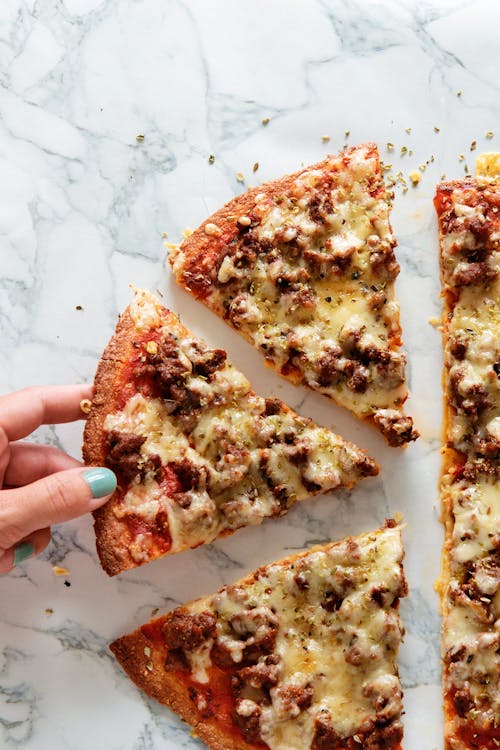
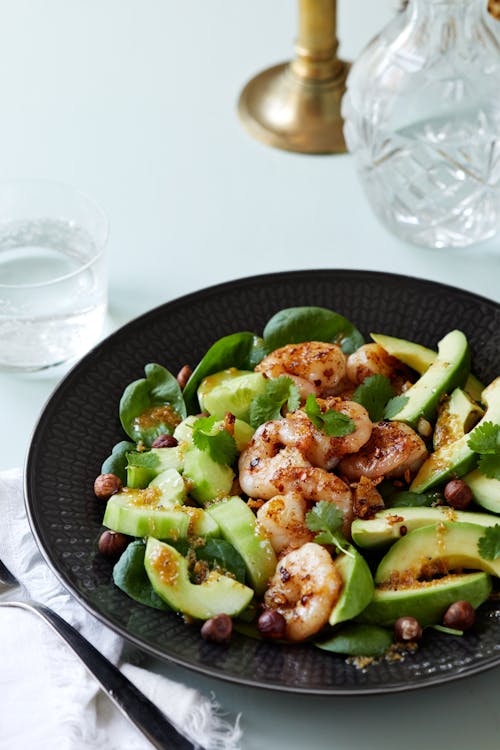
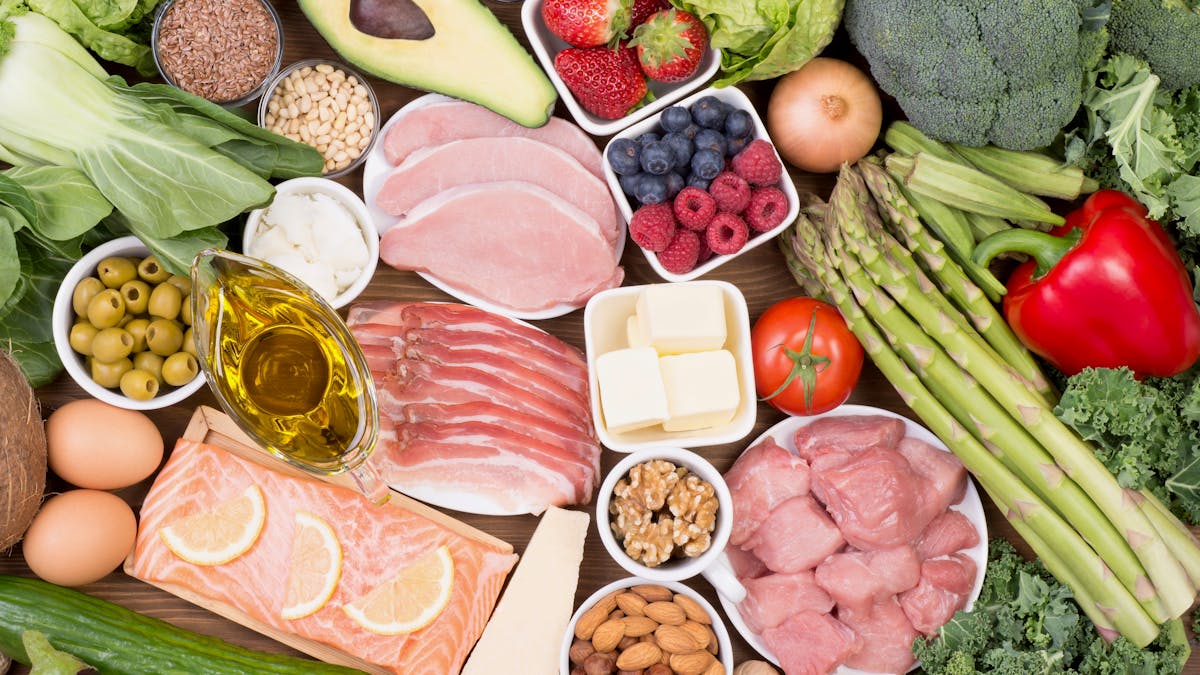
Below are examples of what you could eat, alternatively check out our 1000+ low carb recipes.










Who should NOT do a strict low carb diet?
Most people can safely start a low carb diet.10 But in these situations you may need some preparation or adaptation:
- Are you taking medication for diabetes, e.g. insulin? Learn more
- Are you taking medication for high blood pressure? Learn more
- Are you taking an SGLT2 inhibitor, such as empagliflozin, dapagliflozin or canagliflozin? Combined with very low carbohydrate intake, this drug class raises the risk of euglycemic diabetic ketoacidosis, which can develop while blood glucose still reads normal. Many doctors pause it before a patient starts. Do not start without asking. 11 [Learn more]
- Are you currently breastfeeding? Learn more
If you’re not in any of these groups and don’t have other severe chronic medical conditions — such as advanced liver or kidney failure — you’re good to go! You can read more in our post about contraindications to keto diets.
This guide is written for adults with health issues, including obesity, who could benefit from a low carb diet.
Controversial topics related to a low carb diet — and our take on them — include saturated fats, cholesterol, whole grains, red meat and restricting calories for weight loss.
2. What to eat on a low carb diet
In this section you can learn exactly what to eat on low carb, whether you prefer visual guides, detailed food lists, delicious recipes or a simple get started guide.
Let’s start with a quick visual guide to low carb. Here are the basic low carb food groups from which you can choose until satisfied:
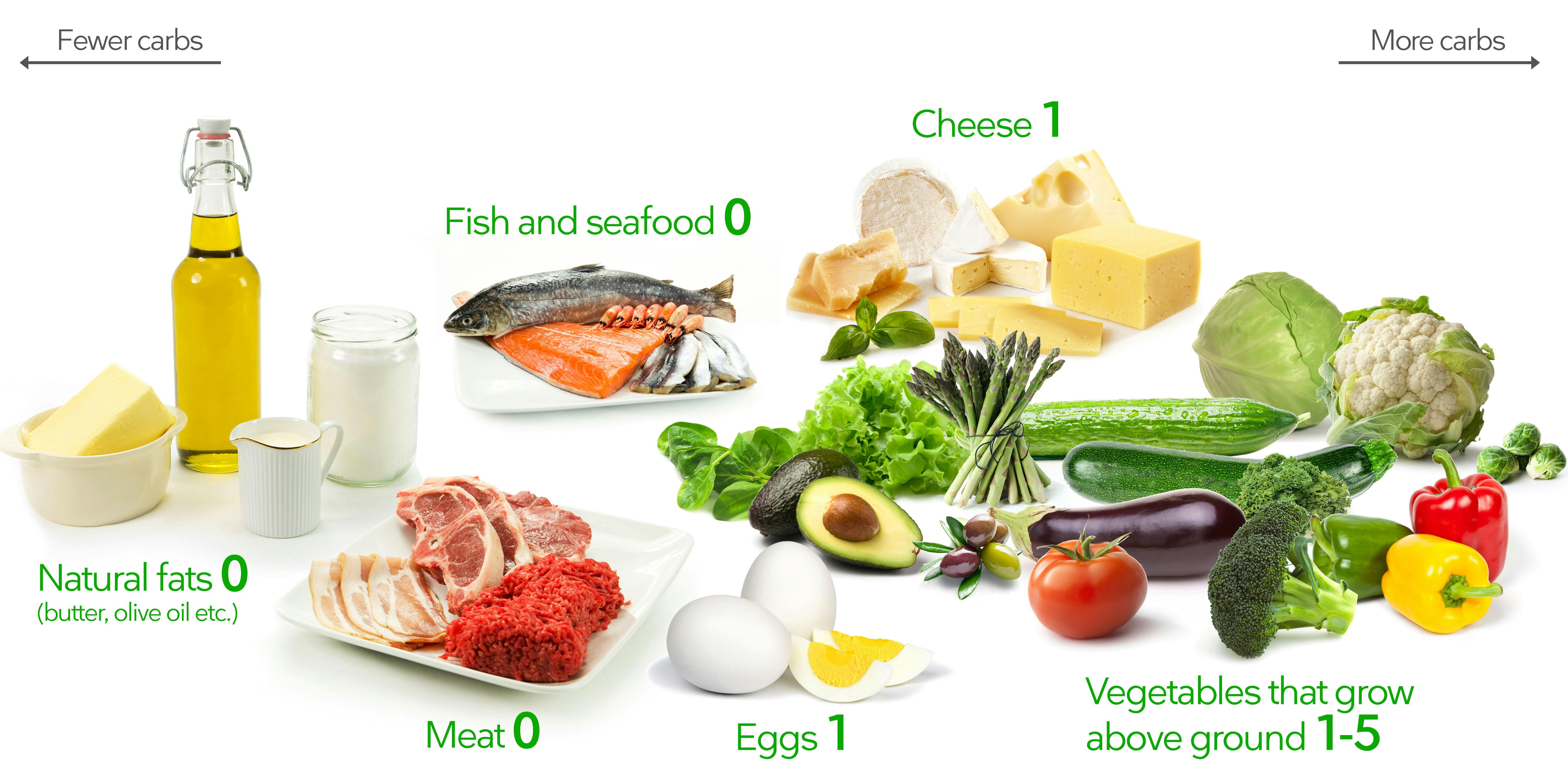
The numbers above are grams of digestible carbs per 100 grams (3.5 ounces) of food. Fiber is not counted; you can eat all the fiber you want.13
All foods above contain less than 5% carbs by weight. Sticking to these foods will make it relatively easy to stay on a moderate low carb diet (less than 50 grams of net carbs per day) or even a strict low carb diet, with less than 20 grams of net carbs per day.
Visual low carb guides
Here are more detailed visual guides to the amount of carbs in common foods. Is a specific food item low or high in carbs? Click to find out:
 Vegetables
  Fruits
 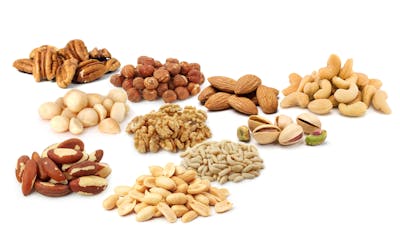 Nuts
Nuts 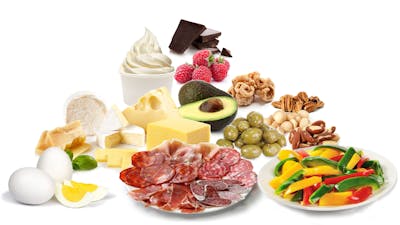 Snacks
  Alcohol
  Fats & sauces
  Drinks
 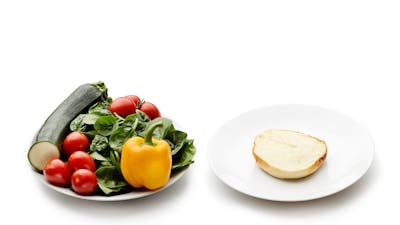 How many carbs?
  Sweeteners
 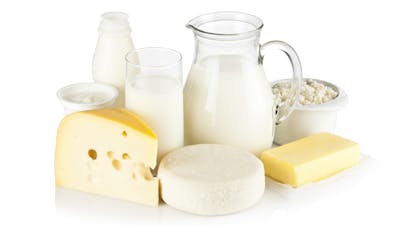 Dairy
Dairy What to drink
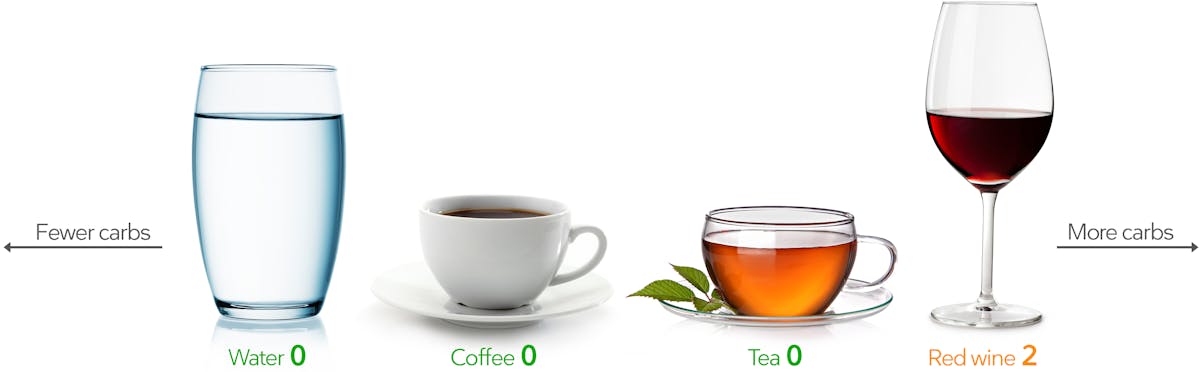
What drinks are good on a low carb diet? Water is perfect, and so is coffee or tea. Preferably don’t use sweeteners.14 A modest amount of milk or cream is okay in coffee or tea (but beware of caffe latte!).15
The occasional glass of wine is fine, too.
For more, check out our complete guides to low carb drinks and low carb alcohol.
Recipes
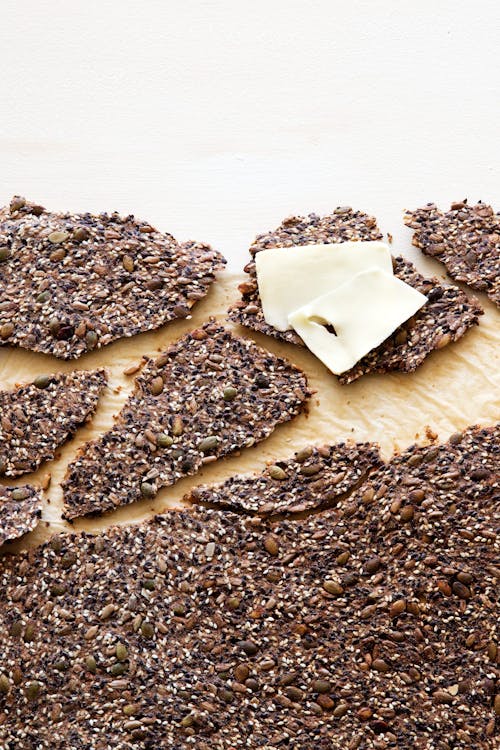
Browse our over 1,000 delicious low carb recipes or head over to our 30-day low carb meal plan for inspiration. You can always find our recipes under “Recipes” in the top menu. Here are a few popular ones:








 Meals
Meals Breakfasts
 Snacks
 Desserts
 Bread
Bread All low-carb recipes
Try to avoid
Here’s what you should not eat on low carb – foods full of sugar and starch. These foods are much higher in carbs.
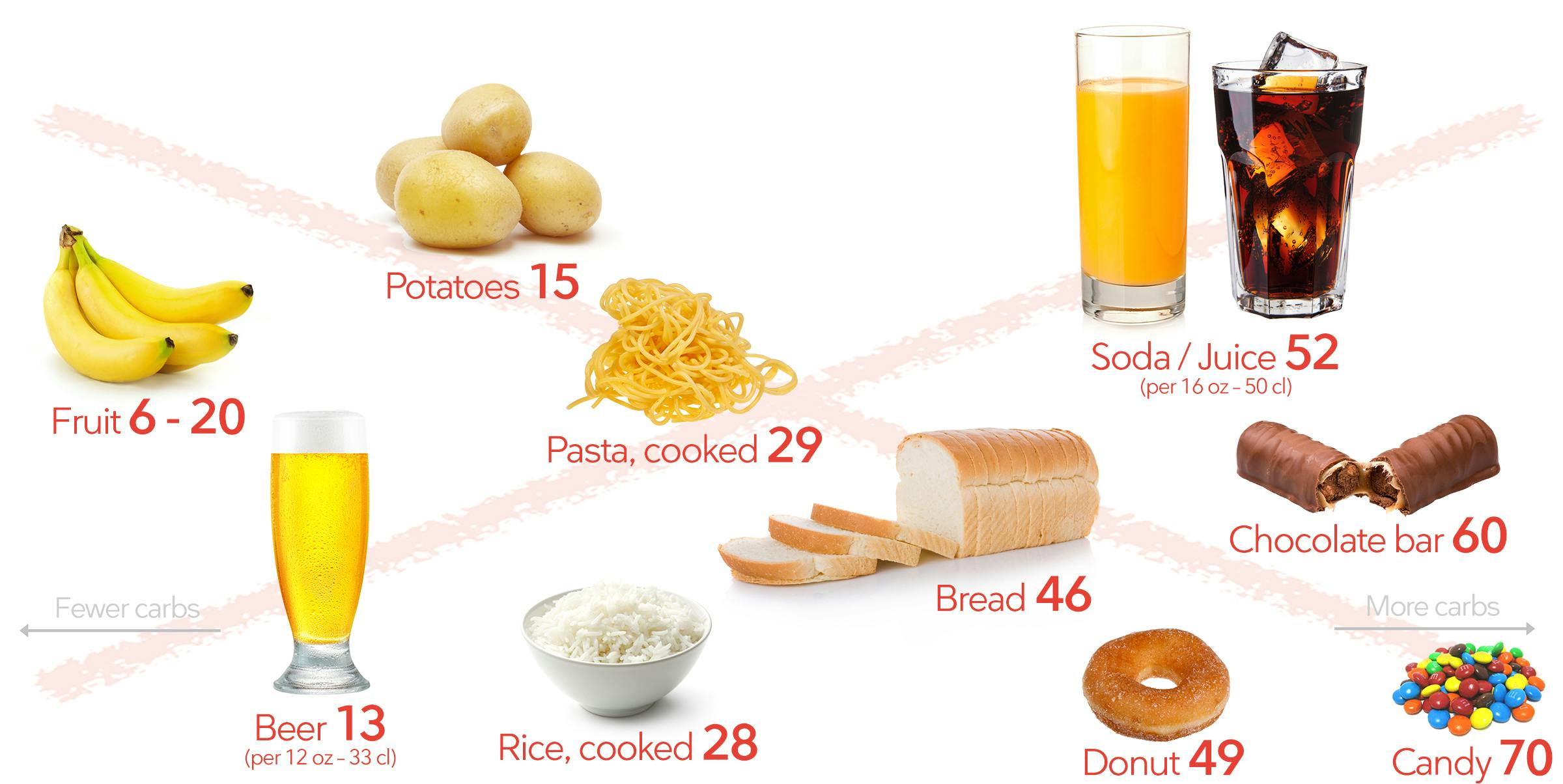
The numbers represent grams of digestible carbs per 100 grams (3.5 ounces) of the food, unless otherwise noted.
Detailed list of foods to avoid
How low carb is a low carb diet?
The lower your carbohydrate intake, the more powerful the effects may be on weight and blood sugar.16 For this reason, we recommend initially following the dietary advice fairly strictly. When you’re happy with your weight and health, you may carefully try eating more carbs if desired (although we find many people don’t want to).
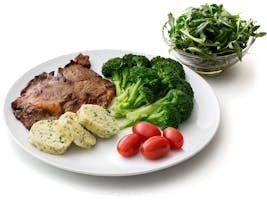
Here are three examples of what a low carb meal can look like, depending on how many carbs you plan to eat per day:
 Ketogenic 0-20
 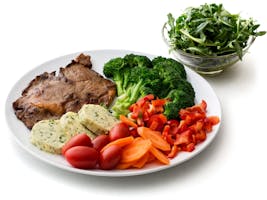 Moderate 20-50
 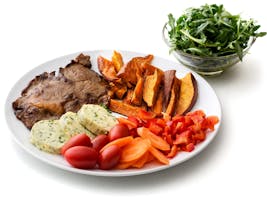 Liberal 50-100
 A strict low carb diet is often called a keto or ketogenic diet. It’s not a no-carb diet, but it contains less than 20 grams of net carbs per day.17
Get started
Keen to get started? Then sign up for our free 2-week low carb challenge, where you’ll be guided step-by-step through your low carb journey.
Leaflet
Here’s a leaflet with basic low carb advice that you may want to print and have around, or give to friends who are curious:
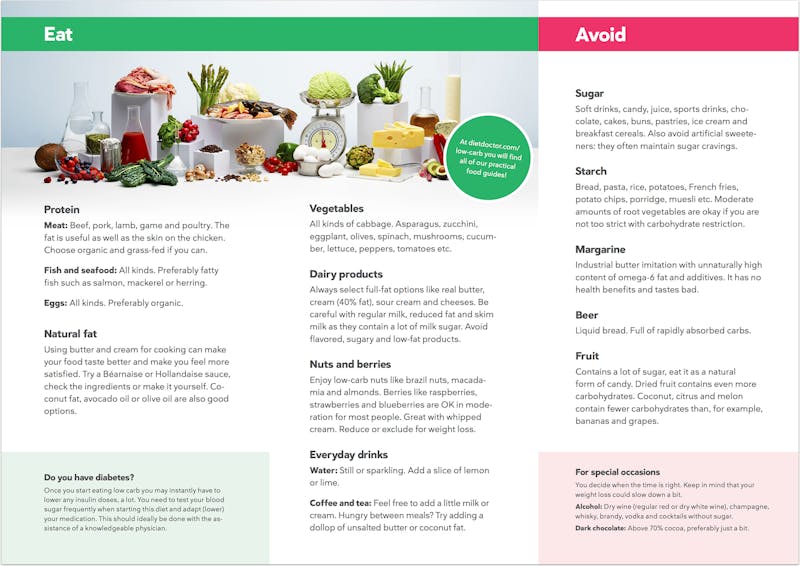

Low carb advice in 40 languages
We have written advice on a low carb diet in 40 languages, including our full Diet Doctor site in Spanish or Swedish.
3. Health benefits of a low carb diet
Why would you consider eating fewer carbs? There are many potential benefits, proven by science and supported by clinical experience, like these:
![Low carb and weight loss]() Lose weight
Lose weight

Most people start eating fewer carbs to lose weight. Studies have shown that low carb diets are at least as effective — if not more effective — than other diets.19 Low carb makes it easier to lose weight without hunger and without having to count calories.20
One carefully controlled trial found that people maintaining weight loss burned roughly 200 to 300 more calories a day on a low carb diet than on a high carb one. That is an interesting result, and it is also contested: other researchers reanalysed the same data and reported that the effect did not hold up, and pooled feeding studies have not found a meaningful difference. 21Treat this as an open question rather than a settled reason to choose low carb.
- How to lose weight – the full guide
- Why low carb can help you lose weight
- How to lose weight with a low carb diet
- Top 10 weight-loss tips for women 40+
- 600+ success stories
![Low carb and diabetes reversal]() Reverse type 2 diabetes22
Reverse type 2 diabetes22
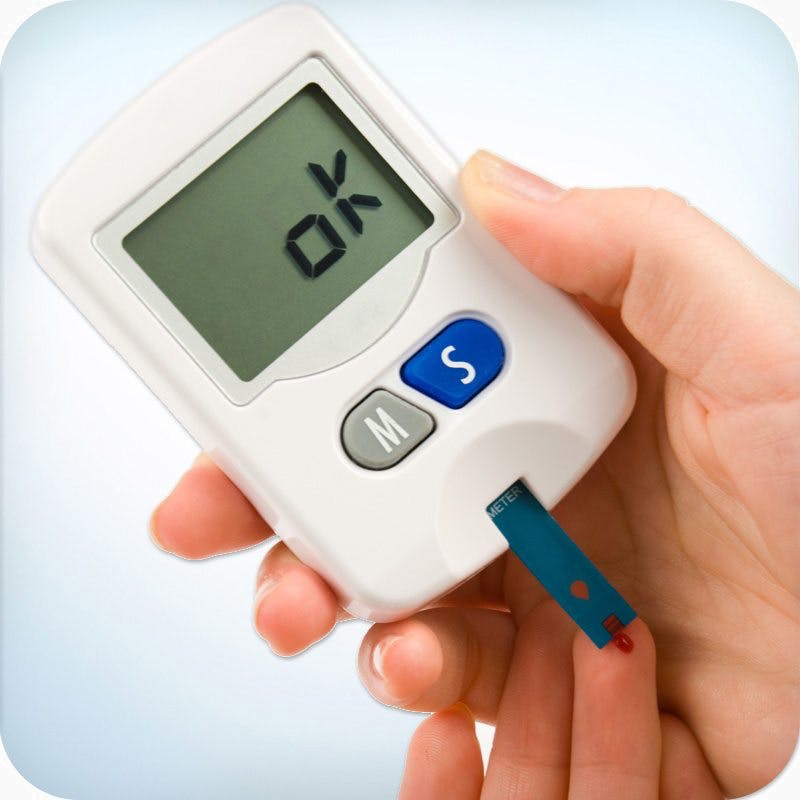
Low carb diets can help reduce or even normalize blood sugar and thus potentially reverse type 2 diabetes.23 The American Diabetes Association has strengthened its position on this. Its 2026 Standards of Care advise clinicians to consider reducing carbohydrate intake for some adults with diabetes to improve blood sugar, and name low carbohydrate eating, alongside Mediterranean style eating, among the evidence-based patterns for preventing type 2 diabetes in people with prediabetes. 24
Low carb can also be helpful in managing type 1 diabetes.25
![Low carb and a calmer stomach]() A grateful gut
A grateful gut

Low carb might help settle a grumpy gut, often reducing symptoms of irritable bowel syndrome such as bloating, gas, diarrhea, cramps, and pain.26 Indigestion, reflux and other digestive issues can sometimes improve, too.27
For some, this is the best part of going low carb and happens usually within the first few days, or first week, of starting the diet.28 Learn more
![Reduce sugar cravings with low carb]() Reduce sugar cravings
Reduce sugar cravings

Are you struggling to stay away from sweet foods, even though you try to eat them in “moderation?” Many people do.29
A low carb diet can often reduce and sometimes even eliminate cravings for sweets 30
Bonus benefits
Weight loss, lower blood sugar, improved mental clarity, and a calmer digestive system are the most frequently cited benefits of low carb eating.31
But some people experience even more improvements, some of which can be life-changing: lower blood pressure and other improvements in risk factors for heart disease,32 less acne and better skin,33 fewer migraines,34 improved mental health symptoms, better fertility,35 and more.36
The links below share more scientific research, as well as inspiring testimonials, about potential low carb benefits.
All low carb benefits Blood pressure
  Acne
Acne  Physical endurance
  Epilepsy
  Heartburn
  PCOS
PCOS  Migraine
  Alzheimer’s
 Success stories
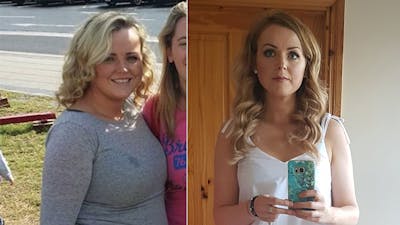
We’ve been sent over 600 amazing low carb success stories and get more all the time. Start with a few, below, or check out the links to all success stories, sorted by category:
![Eight years of zero-carb eating and "have never looked or felt better!"]() Eight years of zero-carb eating and "have never looked or felt better!"
Eight years of zero-carb eating and "have never looked or felt better!"![A low-carb diet: Maintaining a 70-pound weight loss for five years]() A low-carb diet: Maintaining a 70-pound weight loss for five years
A low-carb diet: Maintaining a 70-pound weight loss for five years!["I have so much energy"]() "I have so much energy"
"I have so much energy"


 Women under 39
  Women 40+
  Men under 39
  Men 40+
 ![My low-carb story with Marc Gossange]()
![My success story with Kenneth Russell]()
![My success story with Chuck Hicks]()
![A low-carb story with Dr. Sanjeev Balakrishnan]()
![My success story with Carole Freeman]()
- MEMBERS ONLY
!["I sort of wanted to save the world"]()






4. Low carb tips and guides
To make a low carb diet truly simple and enjoyable requires a few new skills. For example, how do you cook low carb breakfasts that you love? How do you get enough protein? How do you eat more healthy fats? And what’s important to think about when dining out?
Here are helpful tips to get you started.
![Low-carb breakfasts]() Breakfast
Breakfast

Breakfast is a great time to eat low carb. Who doesn’t love bacon and eggs? In the unlikely event that you answered “I don’t,” there are even great options with no eggs at all.
Another strong option is to just have a cup of coffee, as many people are less hungry on a low carb diet and may not need breakfast.37 This can save you plenty of time.
![Low-carb meals]() Meals
Meals

So, what’s for lunch and dinner on a low carb diet? You could have mouth-watering, delicious dishes full of meat, fish, chicken, vegetables and full-fat sauces. The options are nearly limitless, as you will see from our variety of recipes and meal plans.
Check out our recipes to learn to cook amazing low carb meals
![Instead of potatoes]() Instead of potatoes, pasta and rice
Instead of potatoes, pasta and rice

Who needs starchy sides when you can have cauliflower mash or cauliflower rice instead? Not to mention butter-fried green cabbage, yum!
In short, we can show you plenty of great low carb alternatives that are both tasty and healthy. You may even end up liking them better than their carb-heavy predecessors.
![Dining out on low carb]() Eating out
Eating out

It’s very possible to eat low carb even when leaving your house, for example at restaurants. Just avoid starchy foods, double up on the protein, and include natural fats for taste (e.g. olive oil or butter).
This guide helps you with tips for fast food, other restaurants, buffets and for when you eat at a friend’s house
![Low-carb snacks]() Snacks
Snacks

You probably don’t need to snack as much on a low carb diet, as you’ll likely feel satisfied longer.38
However, if you want something right away you could have cheese, nuts, cold cuts or even an egg. There are lots of amazing options
![Low-carb bread]() Bread
Bread

Do you have a hard time living without bread?
You may not have to. Just be aware that there are good and bad low carb bread options. Spoiler: you’ll probably want to stay away from “low-carb” bread from the grocery store! Here’s why, and what to do instead
![Low-carb bread]() How to eat enough protein
How to eat enough protein
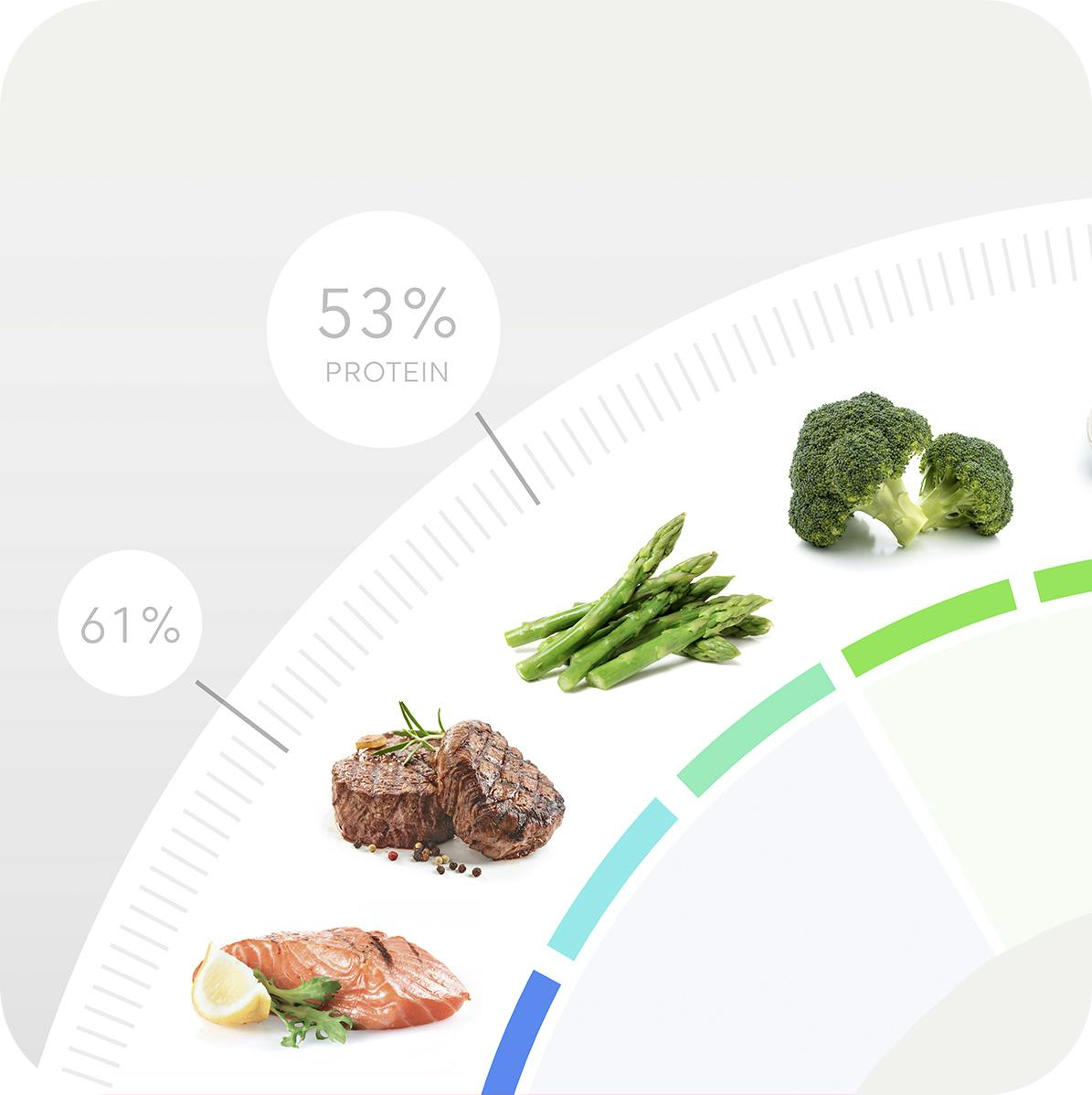
Many low carb diets are also higher in protein as compared to what most people are accustomed to eating. Since numerous studies show higher protein diets are beneficial for weight loss, metabolic health, muscle maintenance, and increased satiety, prioritizing protein is an important part of any eating plan.39
You can learn much more about higher protein diets and how to add more protein in our main protein guide
![How to eat more fat on a low-carb diet]() How to eat more fat
How to eat more fat

Fat can be an amazing flavor enhancer and can provide needed energy calories when you reduce your carbohydrates. But how much fat should you really eat? Hint: enough to enjoy your food but not so much that you overeat calories.
Learn all about it in this guide
![Avoiding processed low-carb foods]() Avoid “low-carb” junk food
Avoid “low-carb” junk food

Many who are eating a low carb diet can get seduced by creatively marketed “low carb” products — cakes, cookies, candies, chocolate, pastas, breads, ice cream, and other substitute foods.
Unfortunately, this rarely ends well, especially not for weight loss. These products are usually lacking beneficial nutrients and are often higher in carbs than their labels imply. We recommend avoiding them entirely if possible. Learn more
![A low-carb diet on a budget]() How to make low carb cheap
How to make low carb cheap

A low carb diet doesn’t have to be expensive. In this guide, you’ll learn how to make it cheap.
With a little planning and preparation you could save a ton of money
![Low-carb cheating]() Low carb cheating
Low carb cheating

Is it a good thing to occasionally stray from a low carb diet? That depends. And it’s worth thinking about what’s right for you. Learn more
Top videos about low carb basics
Here are some of our hundreds of low carb videos:
- MEMBERS ONLY
!["I sort of wanted to save the world"]()
- MEMBERS ONLY
![Q&A with Franziska Spritzler]()
![Low-carb tips with team Diet Doctor – Traveling]()
- MEMBERS ONLY
![Why a low-carb diet and other questions]()
- MEMBERS ONLY
!["A more pleasurable way to live"]()
![A global food revolution]()
![7 tips to make low carb simple]()
- MEMBERS ONLY
![Low-carb living]()
- MEMBERS ONLY
![How to formulate a low-carb keto diet]()





5. Potential side effects on a low carb diet
If you stop eating sugar and starch cold turkey (recommended), you may experience some side effects as your body adjusts. For some people these side effects are mild, while others find the transition more difficult. The symptoms usually last a few days, up to two weeks, and there are ways to minimize them (see below).40
Another option is to decrease the intake of carbohydrates slowly, over a few weeks, to minimize side effects. But the “Nike way” (Just Do It) may be the best choice for most people. Removing most sugar and starch often results in several pounds lost on the scale within a few days. This may be mostly fluids, but it can still be great for motivation.41
Here are side effects that may occur when you suddenly start a strict low carb diet.
![The low-carb induction flu, aka keto flu]() Induction flu
Induction flu

By far the most common short-term side effect is called the induction flu. It’s what makes some people feel poorly for a few days (up to a week) after starting low carb.
Here are common symptoms:42
- Headache
- Fatigue
- Dizziness
- Nausea
- Irritability
These side effects rapidly subside as your body adapts and your fat burning increases. Within a week or two, they are usually gone.43
The primary reason for this may be that carbohydrate-rich foods can increase water retention in your body.44 When you stop eating high-carb foods you’ll lose excess water through your kidneys. This can result in dehydration and increased sodium loss during the first week, before the body has adapted, resulting in the symptoms above.
You can minimize the induction flu by drinking more fluids and by at least temporarily increasing your salt intake. A good option is to drink a cup of bouillon/broth one or two times a day. This usually keeps the induction flu minor or even non-existent.45
Alternatively, drink a few extra glasses of water and put more salt on your food.
Learn more about induction flu and how to treat it
Other common issues on low carb
Beyond the induction flu, there are six more relatively common side effects on a low carb diet. It seems like many of them can also be mostly avoided by getting enough fluid and salt.46
There are also more things you can do to minimize any problems, which you can read about by following the links below:
 Leg cramps
  Constipation
  Bad breath
  Heart palpitations
  Reduced physical performance
  Reduced tolerance to alcohol
Less common issues
These are less common issues, generally affecting a minority of people:
 Potential danger when breastfeeding
  Gallstone problems
  Temporary hair loss
  Elevated cholesterol
  Keto rash
  Gout
Gout All low carb side effects and how to cure them
Low carb controversies
Beyond the mostly transient side effects that may occur on a low carb diet (see above), there are many controversies, misunderstandings and a few pure myths that simply don’t hold up to closer scrutiny. For example, some people claim that the brain needs dietary carbohydrate to function appropriately. Well, that’s simply wrong.47
Read all about these topics on our low carb controversies page, or choose a specific topic below:
 Brain
Brain  Ketoacidosis
  Gut bacteria
  Deficiencies
  Thyroid
  Kidneys
  Depression
  Osteoporosis
  Saturated fat
  Cholesterol
  Environment
 6. Learn more
Here’s the sixth and final section of this low carb page. Do you want to truly understand low carb, and get answers to your remaining questions? Or do you want extra inspiration for yourself or for people you’re trying to help?
Find it here, and start becoming a low carb expert.
![Low-carb TV]() Low carb TV
Low carb TV

Get insight, enjoyment, and inspiration to help you succeed, from the top low carb channel on the planet. Select from hundreds of videos — and we’re adding new ones regularly.
Visit the Low carb video site >
![Low-carb TV]() How low carb works
How low carb works
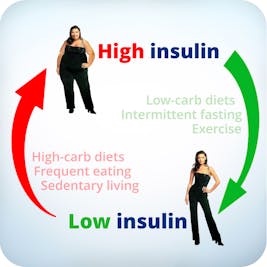
What are you designed to eat, and why can sugar and starch be a problem? Essentially, how does a low carb diet work?
Scientific studies on low carb
![Low carb questions and answers]() Questions and answers
Questions and answers

Are you having problems on low carb? Are you not losing weight like you want to? How many carbs should you eat?
Get answers to your low carb questions
![Why fat is your friend]() Why fat is your friend
Why fat is your friend
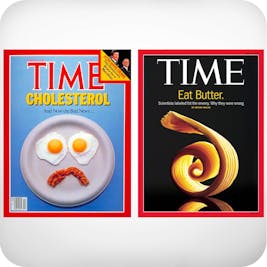
A lot of people still fear natural fat. But really, the whole idea that we should fear fat is based on low quality science that does not support that broad, sweeping conclusion. Recent research supports that the dangers of natural dietary fats have likely been overstated, and many open-minded experts now agree.48
Read more in our evidence based guide to saturated fat and our guide to healthy fats.
![Low-carb events]() Upcoming low carb events
Upcoming low carb events

Do you want to learn much more, and meet experts and other people who are interested in low carb? Here’s a current list of upcoming low carb conferences and other events.
The Food Revolution
Do you want a summary of the ongoing food revolution? From failed low-fat diets and an epidemic of obesity and diabetes, through a growing realization of our mistakes, and towards a potential health revolution.
Watch this talk by Dr. Andreas Eenfeldt, the founder of Diet Doctor:
Next
You’ve reached the end of this page (congratulations!). Keep reading about what to eat on a low carb diet
More



Don’t miss

A low carb diet for beginners - the evidence
This guide is written by Dr. Andreas Eenfeldt, MD and was last updated on August 26, 2026. It was medically reviewed by Dr. Michael Tamber, MD on February 10, 2022.
The guide contains scientific references. You can find these in the notes throughout the text, and click the links to read the peer-reviewed scientific papers. When appropriate we include a grading of the strength of the evidence, with a link to our policy on this. Our evidence-based guides are updated at least once per year to reflect and reference the latest science on the topic.
All our evidence-based health guides are written or reviewed by medical doctors who are experts on the topic. To stay unbiased we show no ads, sell no physical products, and take no money from the industry. We're fully funded by the people, via an optional membership. Most information at Diet Doctor is free forever.
Read more about our policies and work with evidence-based guides, nutritional controversies, our editorial team, and our medical review board.
Should you find any inaccuracy in this guide, please email andreas@dietdoctor.com.
Scientific studies show that compared to other diets, low carb is is at least as good – and sometimes more effective – for weight loss and improvement of certain health markers:
Nutrients 2020: The effect of low-fat and low carbohydrate diets on weight loss and lipid levels: a systematic review and meta-analysis [strong evidence]
PLoS One 2015: Dietary intervention for overweight and obese adults: comparison of low carbohydrate and low-fat diets. A meta-analysis [strong evidence]
Here are two of the top studies showing more weight loss and improvements in health markers on low carb:
New England Journal of Medicine 2008: Weight loss with a low carbohydrate, mediterranean, or low-fat diet [moderate evidence]
Annals of Internal Medicine 2014: Effects of low carbohydrate and low-fat diets: a randomized trial [moderate evidence]
For many more studies on the topic, have a look at our low carb science page.
↩Hundreds of medical doctors recommending a low carb or ketogenic diet ↩
While calories count, you probably don’t have to count them for good results. Low carb diets tend to result in equivalent or greater weight loss compared to other diets, even though most studies of it do not advocate counting calories:
British Journal of Nutrition 2016: Effects of low carbohydrate diets v. low-fat diets on body weight and cardiovascular risk factors: a meta-analysis of randomized controlled trials. [strong evidence for more weight loss]
The reason could be that people’s appetite tends to be suppressed on low carb diets, resulting in consumption of fewer calories while remaining satisfied:
Obesity Reviews 2014: Do ketogenic diets really suppress appetite? A systematic review and meta-analysis [strong evidence]
Another potential cause may be that some people tend to burn more calories on a low carb diet:
British Medical Journal 2018: Effects of a low carbohydrate diet on energy expenditure during weight loss maintenance: randomized trial [moderate evidence]
Learn more here: Should you count calories on a low carb or keto diet? ↩
A keto diet is a common name for a very strict low carb diet, containing very few carbohydrates, generally below 20 grams of net carbs per day. This usually results in a metabolic state called “ketosis”, hence the name.
A low carb diet is always relatively low in carbohydrates, but not necessarily so low that people achieve ketosis. Here at Diet Doctor we consider anything up to 100 grams of net carbohydrates per day a low carb diet. ↩
BMC Public Health 2019:
Systematic review of the impact of nutrition claims related to fat, sugar and energy content on food choices and energy intake [review of nonrandomized studies, weak evidence]Journal of Marketing Research 2006: Can “Low-Fat” Nutrition Labels Lead to Obesity? [nonscientific study, ungraded]
↩While this is still controversial, many modern systematic reviews find no benefit from avoiding saturated fats, and minimal if any benefit from replacing them with unsaturated fats:
Open Heart 2016: Evidence from randomized controlled trials does not support current dietary fat guidelines: a systematic review and meta-analysis [strong evidence]
Nutrition Journal 2017: The effect of replacing saturated fat with mostly n-6 polyunsaturated fat on coronary heart disease: a meta-analysis of randomized controlled trials [strong evidence]
Further modern reviews on related topics:
Annals of Internal Medicine 2016: Association of dietary, circulating, and supplement fatty acids with coronary risk: a systematic review and meta-analysis [strong evidence for lack of obvious health effects of emphasizing “fat quality”]
PLOS ONE 2016: Is butter back? A systematic review and meta-analysis of butter consumption and risk of cardiovascular disease, diabetes, and total mortality [strong evidence for a lack of major health issues related to butter consumption]
Learn more about why low-fat diets may have been a major mistake
Low carb diets tend to result in equivalent or greater weight loss, even though most studies of it do not advocate counting calories:
British Journal of Nutrition 2016: Effects of low carbohydrate diets v. low-fat diets on body weight and cardiovascular risk factors: a meta-analysis of randomised controlled trials. [strong evidence for more weight loss]
The reason could be that people tend to feel less hungry on low carb diets, so that people can eat fewer calories and still be satisfied:
Obesity Reviews 2014: Do ketogenic diets really suppress appetite? A systematic review and meta-analysis [strong evidence]
Another potential cause may be that under some circumstances people tend to burn more calories on a low carb diet:
British Medical Journal 2018: Effects of a low carbohydrate diet on energy expenditure during weight loss maintenance: randomized trial [moderate evidence] ↩
Insulin levels drop significantly on a low carb diet, as described here: Yes, a low carb diet greatly lowers your insulin
The following RCTs also provide supporting evidence:
American Journal of Clinical Nutrition 2010: Lack of suppression of circulating free fatty acids and hypercholesterolemia during weight loss on a high-fat, low carbohydrate diet. [randomized trial; moderate evidence]
Nutrition and Metabolism 2006: Comparison of isocaloric very low carbohydrate/high saturated fat and high carbohydrate/low saturated fat diets on body composition and cardiovascular risk. [randomized trial; moderate evidence]
Low carb diets result in equivalent or greater weight loss:
International Journal of Endocrinology 2021: Comparing the efficacy and safety of low carbohydrate diets with low-fat diets for type 2 diabetes mellitus patients: a systematic review and meta-analysis of randomized clinical trials [strong evidence]
British Journal of Nutrition 2016: Effects of low carbohydrate diets v. low-fat diets on body weight and cardiovascular risk factors: a meta-analysis of randomised controlled trials. [strong evidence for more weight loss]
Increased satiety and reduced hunger:
Obesity Reviews 2014: Do ketogenic diets really suppress appetite? A systematic review and meta-analysis [strong evidence]
Increased fat burning:
British Medical Journal 2018: Effects of a low carbohydrate diet on energy expenditure during weight loss maintenance: randomized trial [moderate evidence]
Hormones play a role in regulating our weight. Eating fewer carbohydrates generally lowers blood glucose, which in turn lowers insulin, also known as the fat-storing hormone. This may make it easier to access and burn excess body fat, without hunger or calorie counting.
The main fear about low carb, higher-fat diets has been potentially increasing the risk of heart disease. But modern studies do not support that theory, and many risk factors even improve on low carb:
- British Journal of Nutrition 2016: Effects of low carbohydrate diets v. low-fat diets on body weight and cardiovascular risk factors: a meta-analysis of randomised controlled trials. [strong evidence for improved risk factors]
- Obesity reviews 2012: Systematic review and meta‐analysis of clinical trials of the effects of low carbohydrate diets on cardiovascular risk factors [strong evidence for improved risk factors]
- Circulation 2010: Dietary intervention to reverse carotid atherosclerosis [moderate evidence for a reduction in atherosclerosis]
- Cardiovascular Diabetology 2018: Cardiovascular disease risk factor responses to a type 2 diabetes care model including nutritional ketosis induced by sustained carbohydrate restriction at 1 year: an open label, non-randomized, controlled study [nonrandomized trial; weak evidence]
SGLT2 inhibitor prescribing information. American Diabetes Association Professional Practice Committee. Standards of Care in Diabetes 2026. Diabetes Care. 2026;49(Suppl 1). ↩
ADA Professional Practice Committee. 3. Prevention or Delay of Diabetes and Associated Comorbidities. Diabetes Care. 2026;49(Suppl 1):S50-S67. ↩
Most fiber does not directly affect blood sugar levels, though it can indirectly slow down the absorption of digestible carbohydrates that you eat.
Fiber can have both beneficial and some potential negative effects on gut health, but it usually has no major impact on the effects of a low carb diet. ↩
Even zero-calorie sweeteners may have some negative effects, including maintaining a preference for sweet tastes and an increased sense of reward. This can increase the risk of cravings and overeating. This is mainly based on clinical experience [weak evidence].
There is one RCT showing weight loss from avoiding artificial sweeteners:
The American Journal of Clinical Nutrition 2015: Effects on weight loss in adults of replacing diet beverages with water during a hypoenergetic diet: a randomised, 24-wk clinical trial [moderate evidence]
For more, check out our guide to low carb sweeteners or have a look at these further references:
- International Journal of Obesity 2017: Effects of aspartame-, monk fruit-, stevia- and sucrose-sweetened beverages on postprandial glucose, insulin and energy intake [randomized trial; moderate evidence]
- Physiology & Behavior 2016: Recent studies of the effects of sugars on brain systems involved in energy balance and reward: relevance to low-calorie sweeteners [overview article; ungraded]
- PLOS Medicine 2017: Artificially sweetened beverages and the response to the global obesity crisis [overview article; ungraded]
A modest amount could, for example, be a tablespoon. But these add up quickly if you drink multiple cups per day.
Also avoid other coffee drinks with lots of added milk or sugar. ↩
This is mainly based on the consistent experience of low carb practitioners, as well as stories from people trying different levels of carb restriction [weak evidence].
One trial showed that diets of 20 grams and 50 grams of carbs equally helped healthy volunteers maintain ketosis. However, we don’t know if the same is true for people with obesity, insulin resistance or diabetes. In addition, there is not yet an RCT that tests the health benefits of two low carb diets of varying strictness head-to-head. But RCTs of strict low carb diets appear to often show better results, compared to RCTs of more moderate or liberal low carb diets.
Read more about RCTs of low carb interventions for weight loss ↩
Grams of net carbs = Grams of total carbs — Grams of fiber ↩
Our weekly newsletter gives you the top low carb news, recipes and tips without ads or industry influence. Your email is kept 100% private. To cancel press “unsubscribe” at the bottom of any newsletter. ↩
Reviews in Endocrinology and Metabolic Disorders 2020:
Efficacy and safety of very low calorie ketogenic diet (VLCKD) in patients with overweight and obesity: A systematic review and meta-analysis [systematic review of randomized trials; strong evidence]BMJ 2020: Comparison of dietary macronutrient patterns of 14 popular named dietary programmes for weight and cardiovascular risk factor reduction in adults: systematic review and network meta-analysis of randomised trials [systematic review of randomized trials; strong evidence]
British Journal of Nutrition 2016: Effects of low carbohydrate diets v. low-fat diets on body weight and cardiovascular risk factors: a meta-analysis of randomised controlled trials. [strong evidence for more weight loss] ↩
Scientific studies show that compared to other diets, low carb or keto diets are equivalent to or more effective for weight loss (even when many of the studies do not recommend counting calories):
PLoS One 2015: Dietary intervention for overweight and obese adults: comparison of low carbohydrate and low-fat diets. A meta-analysis [strong evidence]
Low carb diets reduce feelings of hunger:
Obesity Reviews 2014: Do ketogenic diets really suppress appetite? A systematic review and meta-analysis [strong evidence] ↩
-
Ebbeling CB, Feldman HA, Klein GL, et al. BMJ. 2018;363:k4583.
Hall KD, Guo J, Speakman JR. International Journal of Obesity. 2019;43:2350-2354. Some disagree with the use of the word “reverse” when it comes to type 2 diabetes. The concern is that it may imply the disease is completely gone, never to return. At Diet Doctor, we use the term “reverse” to indicate that blood sugar levels are no longer in the diabetic range. However, we acknowledge that blood sugars will likely return to diabetic levels if a patient goes back to their prior high-carb eating habits. Therefore, “reverse” does not imply a forever cure. ↩
BMJ 2021: Efficacy and safety of low and very low carbohydrate diets for type 2 diabetes remission: systematic review and meta-analysis of published and unpublished randomized trial data [systematic review of randomized trials; strong evidence]
Diabetes Research and Clinical Practice 2018: Effect of dietary carbohydrate restriction on glycemic control in adults with diabetes: A systematic review and meta-analysis [strong evidence]
BMJ Open Diabetes Research and Care 2017: Systematic review and meta-analysis of dietary carbohydrate restriction in patients with type 2 diabetes [strong evidence]
A non-randomized trial with risk of financial bias shows remarkable effectiveness at reversing type 2 diabetes:
Diabetes Therapy 2018: Effectiveness and safety of a novel care model for the management of type 2 diabetes at 1 year: An open-label, non-randomized, controlled study [nonrandomized trial; weak evidence]
Frontiers in Endocrinology 2019: Long-term effects of a novel continuous remote care intervention including nutritional ketosis for the management of type 2 diabetes: a 2-year non-randomized clinical trial [nonrandomized trial; weak evidence]
-
ADA Professional Practice Committee. 3. Prevention or Delay of Diabetes. Diabetes Care. 2026;49(Suppl 1):S50-S67. Recommendation 3.4.
ADA Professional Practice Committee. 5. Facilitating Positive Health Behaviors and Well-being. Diabetes Care. 2026;49(Suppl 1):S89-S131. Recommendation 5.15. There is still a shortage of high-quality studies, but what exists is promising, sometimes showing remarkable improvements.
Diabetes, Obesity and Metabolism 2019: Low versus high carbohydrate diet in type 1 diabetes: A 12-week randomized open-label crossover study[randomized trial; moderate evidence]
PLOS One 2018: Low-carbohydrate diets for type 1 diabetes mellitus: a systematic review [weak evidence, downgraded due to lack of high-quality studies]
Pediatrics 2018: Management of type 1 diabetes with a very low–carbohydrate diet [online survey, very weak evidence for an exceptionally strong positive effect]
Asia Pacific Journal of Clinical Nutrition 2016: A randomised trial of the feasibility of a low carbohydrate diet vs standard carbohydrate counting in adults with type 1 diabetes taking body weight into account [moderate evidence for a positive effect, though a very small study]
This is based on clinical experience of low carb practitioners and was unanimously agreed upon by our low carb expert panel. You can learn more about our panel here [weak evidence].
A low carb diet is a low FODMAP diet, and the latter has scientific support for improving IBS symptoms:
Gut 2021: Efficacy of a low FODMAP diet in irritable bowel syndrome: systematic review and network meta-analysis [strong evidence]
Frontiers in Nutrition 2021: A low-FODMAP diet improves the global symptoms and bowel habits of adult IBS patients: a systematic review and meta-analysis [strong evidence]
European Journal of Nutrition 2021: Efficacy of a low-FODMAP diet in adult irritable bowel syndrome: a systematic review and meta-analysis [strong evidence]
Journal of Gastroenterology and Hepatology 2017: The evidence base for efficacy of the low FODMAP diet in irritable bowel syndrome: is it ready for prime time as a first-line therapy? [overview article, ungraded]
This study showed similar improvements between the low-FODMAP and traditional dietary advice groups. But the low-FODMAP group achieved earlier improvements in stool frequency and gas. Also, severe symptoms at baseline along with the predominance of certain kinds of bacteria predicted a favorable response to the low-FODMAP diet:
American Journal of Clinical Nutrition 2021: Low fermentable oligosaccharides, disaccharides, monosaccharides, and polyols diet compared with traditional dietary advice for diarrhea-predominant irritable bowel syndrome: a parallel-group, randomized controlled trial with analysis of clinical and microbiological factors associated with patient outcomes [moderate evidence]
This study showed that a low-FODMAP diet was superior to traditional dietary advice, though compliance with the diet dropped from 93% at 4 weeks to 64% at 16 weeks:
Journal of Gastroenterology and Hepatology 2021: Low fermentable oligosaccharide, disaccharide, monosaccharide, and polyol diet in patients with diarrhea-predominant irritable bowel syndrome: A prospective, randomized trial [moderate evidence] ↩
Digestive Diseases and Sciences 2006: A very low carbohydrate diet improves gastroesophageal reflux and its symptoms.[non-controlled study, weak evidence]
Alimentary Pharmacology and Therapeutics 2016: Dietary carbohydrate intake, insulin resistance and gastro‐oesophageal reflux disease: a pilot study in European‐ and African‐American obese women [non-controlled study, weak evidence]
This is based on clinical experience of low carb practitioners and was unanimously agreed upon by our low carb expert panel. You can learn more about our panel here [weak evidence]. ↩
Like anything else that can be highly rewarding – gambling, drugs, etc. – sweet, processed foods can result in behavior resembling an addiction. Note that it’s likely not just a specific substance – e.g. sugar – that is the culprit leading to addiction, but rather the full rewarding experience of certain foods, e.g. sweet chocolate.
Here are a few papers discussing this issue.
Childhood Obesity 2017: Food addiction: a barrier for effective weight management for obese adolescents [non-controlled study; weak evidence]
Current Opinion in Clinical Nutrition and Metabolic Care 2013: Sugar addiction: pushing the drug-sugar analogy to the limit [overview article; ungraded]
Neuroscience & Biobehavioral Reviews 2008: Evidence for sugar addiction: behavioral and neurochemical effects of intermittent, excessive sugar intake [overview article; ungraded]
↩This is most likely the result of avoiding foods high in sugar and refined carbohydrates, which tend to activate reward pathways in the brain.
As with any other addiction, avoiding the cause is a necessary part of dealing with it. For example, a person addicted to alcohol may struggle to consume it “in moderation” and be successful. Although it is unclear if food addiction meets all criteria for a clinical addiction, it is clear that many people experience symptoms similar to those with addiction.
Nutrients 2019: Changes in Food Cravings and Eating Behavior after a Dietary Carbohydrate Restriction Intervention Trial [nonrandomized study, weak evidence]
In the case of low carb diets, it may also be that the hunger-reducing effect can be helpful:
Obesity Reviews 2014: Do ketogenic diets really suppress appetite? A systematic review and meta-analysis [strong evidence] ↩
Most of these potential benefits have strong or moderate scientific support (see references higher up on the page).
Regarding mental clarity, this is something that is often reported by people on a strict low carb diet [anecdotal reports; very weak evidence].
The scientific support for increased mental clarity is not strong. Here are references showing minor signs of improvement:
Neurobiology of Aging 2012: Dietary ketosis enhances memory in mild cognitive impairment [randomized trial; moderate evidence for verbal memory improvement in people with early Alzheimer’s]
Epilepsy Research 2012: The effects of the ketogenic diet on behavior and cognition [overview article; ungraded]
Journal of the Association of Nurses for AIDS Care 2019: Cognitive Effects of a Ketogenic Diet on Neurocognitive Impairment in Adults Aging With HIV: A Pilot Study. [randomized trial; moderate evidence]
↩British Journal of Nutrition 2016: Effects of low carbohydrate diets v. low-fat diets on body weight and cardiovascular risk factors: a meta-analysis of randomised controlled trials. [strong evidence]
Annals of Internal Medicine 2010: Weight and metabolic outcomes after 2 years on a low carbohydrate versus low-fat diet [randomized trials; moderate evidence]
Cardiovascular Diabetology 2018: Cardiovascular disease risk factor responses to a type 2 diabetes care model including nutritional ketosis induced by sustained carbohydrate restriction at 1 year: an open label, non-randomized, controlled study [weak evidence] ↩
American Journal of Clinical Nutrition 2007: A low-glycemic-load diet improves symptoms in acne vulgaris patients: a randomized controlled trial [moderate evidence]
This review article discusses the theory and the science behind this potential effect:
Skin Pharmacology and Physiology 2012: Nutrition and acne: therapeutic potential of ketogenic diets [overview article; ungraded] ↩
This is a commonly reported positive effect from people who start a ketogenic diet. Here are some stories. [anecdotal reports; very weak evidence]
Here are some promising studies:
Nutrients 2019: A randomized double-blind, cross-over trial of very low-calorie diet in overweight migraine patients: a possible role for ketones? [randomized trial; moderate evidence]
European Journal of Neurology 2015: Migraine improvement during short lasting ketogenesis: a proof-of-concept study. [randomized trial; moderate evidence]
Journal of Headache and Pain 2016: Cortical functional correlates of responsiveness to short-lasting preventive intervention with ketogenic diet in migraine: a multimodal evoked potentials study. [non-controlled study; weak evidence] ↩
Nutrients 2017: The effect of low carbohydrate diets on fertility hormones and outcomes in overweight and obese women: a systematic review [strong evidence]
There is likely a positive effect of low carb diets on PCOS, a common hormonal problem for women that can impact fertility.
European Journal of Clinical Nutrition 2013: Beyond weight loss: a review of the therapeutic uses of very low carbohydrate (ketogenic) diets ↩
Obesity Reviews 2014: Do ketogenic diets really suppress appetite? A systematic review and meta-analysis [strong evidence]
Contrary to older misconceptions, a recent meta-analysis of randomized clinical trials found that people assigned to skip breakfast ate less overall and lost more weight than those assigned to eat breakfast daily:
British Medical Journal 2019: Effect of breakfast on weight and energy intake: systematic review and meta-analysis of randomised controlled trials [strong evidence] ↩
This is a very common experience from people trying a low carb diet, and it’s supported by science:
Obesity Reviews 2014: Do ketogenic diets really suppress appetite? A systematic review and meta-analysis [strong evidence]
The appetite-reducing effect might be partially mediated by certain hormonal factors:
European Journal of Clinical Nutrition 2013: Ketosis and appetite-mediating nutrients and hormones after weight loss [nonrandomized study, weak evidence] ↩
Nutrients 2018: Effects of adherence to a higher protein diet on weight loss, markers of health, and functional capacity in older women participating in a resistance-based exercise program [randomized trial; moderate evidence]
American Journal of Clinical Nutrition 2008: Protein, weight management, and satiety [overview article; ungraded] ↩
This is based on clinical experience of low carb practitioners and was unanimously agreed upon by our low carb expert panel. You can learn more about our panel here [weak evidence].
There was also a small RCT in healthy volunteers demonstrating side effects lasting up to 17 days.
Nutrition X 2019: Effects of differing levels of carbohydrate restriction on the achievement of nutritional ketosis, mood, and symptoms of carbohydrate withdrawal in healthy adults: A randomized clinical trial [randomized trial; moderate evidence]
↩This is based on clinical experience of low carb practitioners and was unanimously agreed upon by our low carb expert panel. You can learn more about our panel here [weak evidence]. ↩
Nutrition X 2019: Effects of differing levels of carbohydrate restriction on the achievement of nutritional ketosis, mood, and symptoms of carbohydrate withdrawal in healthy adults: A randomized clinical trial [randomized trial; moderate evidence] ↩
This is based on clinical experience of low carb practitioners and was unanimously agreed upon by our low carb expert panel. You can learn more about our panel here [weak evidence].
↩International Journal of Hypertension 2011: Insulin resistance, obesity, hypertension, and renal sodium transport [overview article; ungraded] ↩
This is mainly based on the consistent experience of experienced clinicians [weak evidence]. But there’s also some support from this study that found only minor increases in side effects, while advising participants to drink bouillon:
Nutrition & Metabolism 2008: The effect of a low carbohydrate, ketogenic diet versus a low-glycemic index diet on glycemic control in type 2 diabetes mellitus [moderate evidence] ↩
E.g. one or two cups of bouillon per day.
The evidence for this is mainly based on the consistent experience of experienced clinicians [weak evidence]. But there’s also some support from this study that found only minor increases in side effects, while advising participants to drink bouillon:
Nutrition & Metabolism 2008: The effect of a low carbohydrate, ketogenic diet versus a low-glycemic index diet on glycemic control in type 2 diabetes mellitus [moderate evidence] ↩
On a strict low carb diet, the liver produces ketones from the metabolism of fat, and those ketones become an effective fuel for the brain. The liver also releases adequate carbohydrate (glucose) into the bloodstream, even when not eating many carbs. Learn more about it:
Journal of Clinical Investigations 1967: Brain metabolism during fasting [nonrandomized study, weak evidence]
Critical Care 2011: Clinical review: ketones and brain injury [overview article; ungraded]
Journal of Cerebral Blood Flow and Metabolism 2017: Inverse relationship between brain glucose and ketone metabolism in adults during short-term moderate dietary ketosis: A dual tracer quantitative positron emission tomography study[non-controlled study; weak evidence]
↩Open Heart 2016: Evidence from randomised controlled trials does not support current dietary fat guidelines: a systematic review and meta-analysis [strong evidence]
Learn more about why low-fat diets may have been a major mistake ↩