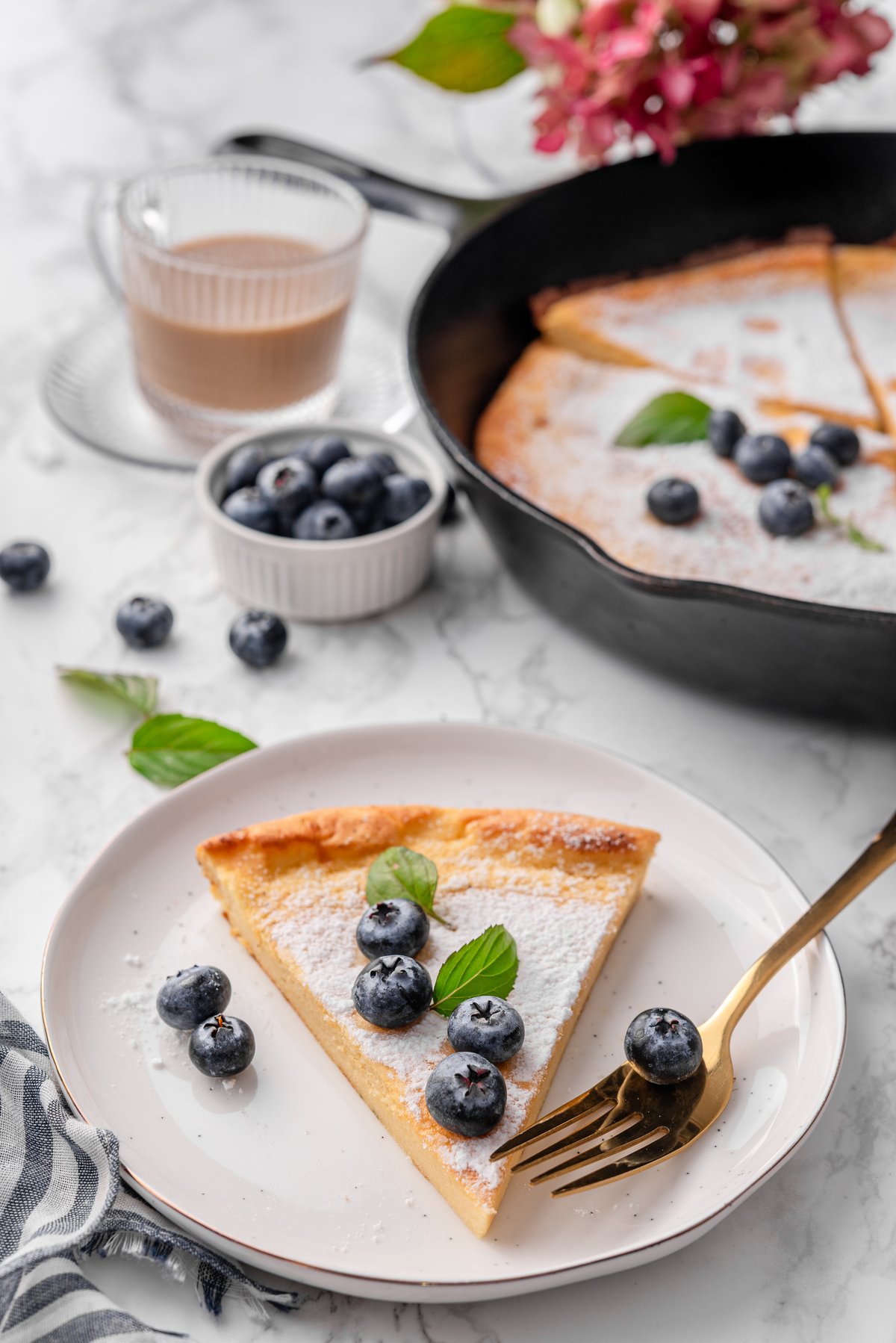
 , nutritional review by Jill Wallentin
 in Recipes, Dessert
Low carb Dutch baby
Ingredients
- 5 5 large egg at room temperaturelarge eggs at room temperature
- ½ cup (2 oz.) 120 ml (55 g) almond flour finely ground
- ¼ cup 60 ml heavy whipping cream
- 3½ oz. (7 tbsp) 100 g (100 ml) cream cheese softened
- 1 tsp 1 tsp baking powder
- 2 tbsp 2 tbsp erythritol
- 2 tsp 2 tsp vanilla extract
- 3 tbsp 3 tbsp butter for the skillet
- ½ cup (2½ oz.) 120 ml (75 g) fresh blueberries or fresh raspberries
- 2 tbsp 2 tbsp powdered erythritol

Instructions
- Preheat the oven to 425°F (220°C). Place a 12-inch (30 cm) oven-safe skillet in the oven while it heats.
- Add the eggs, almond flour, heavy cream, cream cheese, erythritol, baking powder, and vanilla to a blender. Blend for about 1 minute, until completely smooth.
- Carefully remove the hot skillet from the oven and add the butter. Swirl until melted, coating the bottom and sides of the skillet evenly. The butter should sizzle but not brown or burn.
- Immediately pour the batter into the hot skillet and return it to the oven. Bake for 15–20 minutes, without opening the oven door, until the center is set and the edges are puffed and golden brown.
- Remove from the oven and top with fresh blueberries. Dust with powdered erythritol and serve immediately while warm.
Recipe notes and tips
What is a Dutch baby?
A Dutch baby, also known as a German pancake, is a large oven-baked pancake traditionally made with eggs, flour, and milk. It's baked in a hot skillet, which helps create its characteristic puffed edges and tender center.
This low carb version replaces wheat flour with almond flour and uses cream cheese for a rich, custardy texture. It's a delicious choice for brunch or dessert.
Why didn't my Dutch baby rise as much?
Unlike a traditional Dutch baby made with wheat flour, this almond flour version may not puff up as dramatically. It will also settle slightly after coming out of the oven, which is completely normal.
For the best results, use room-temperature eggs, blend the batter until smooth, and make sure the skillet is thoroughly heated before adding the batter. Avoid opening the oven door during baking.
What kind of skillet should I use?
A 12-inch (30 cm) cast-iron skillet works particularly well because it retains heat and helps create golden edges. Any oven-safe skillet of a similar size will work, but avoid using one with a plastic or non-oven-safe handle.
Can I use another sweetener?
Yes! You can use a granulated erythritol-stevia blend instead of pure erythritol. Adjust the amount according to the sweetness of your chosen product. For dusting, use powdered erythritol or a powdered version of your chosen alternative.
Learn more in our low carb sweeteners guide.
Can I use other berries?
Absolutely! Fresh raspberries, blackberries, or sliced strawberries are delicious alternatives to blueberries. You can also add a little finely grated lemon zest to the batter for a refreshing citrus flavor.
Can I make individual Dutch babies?
Yes! Divide the batter among smaller oven-safe skillets or well-buttered muffin cups. Reduce the baking time and watch closely, as smaller portions cook faster.
Can I prepare the batter ahead?
For the best rise and texture, prepare the batter just before baking. You can measure the dry ingredients and soften the cream cheese ahead of time to make preparation quicker.
Storage and leftovers
A Dutch baby is best enjoyed immediately after baking, while the edges are still golden and slightly crisp. Store leftovers in an airtight container in the refrigerator for up to 3 days. Reheat gently in the oven or air fryer, although the texture will be softer than when freshly baked.