 , nutritional review by Jill Wallentin
 in Recipes, Dessert
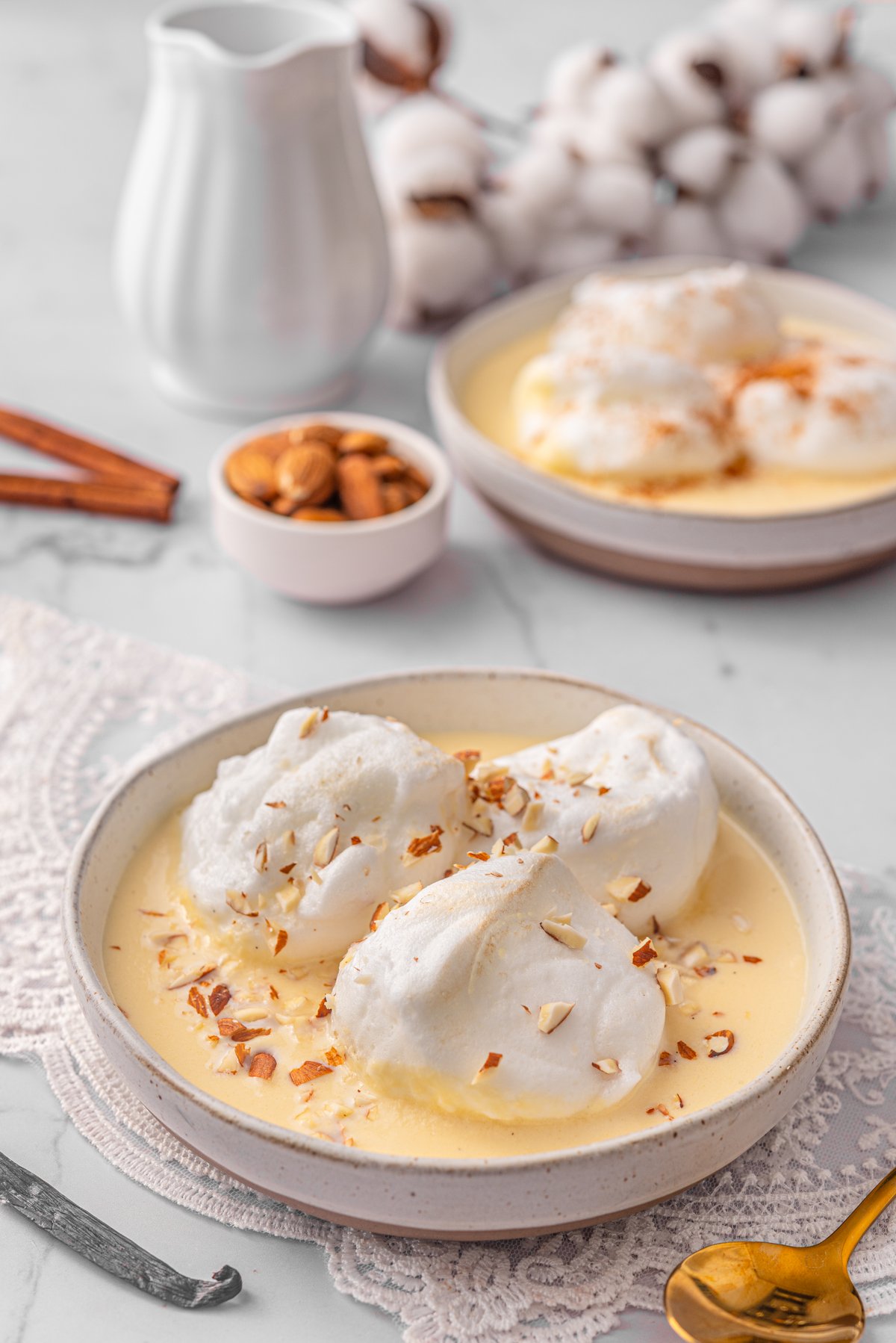
Keto floating island (Île flottante)
Ingredients
- 1 cup 240 ml coconut milk or heavy whipping cream
- 1 cup 240 ml unsweetened almond milk
- 4 4 large egg yolklarge egg yolks
- 1⁄3 cup (1½ oz.) 80 ml (45 g) powdered erythritol or to taste
- 2 tsp 2 tsp vanilla extract preferably vanilla bean paste
- 2 tbsp 2 tbsp butter
- 4 4 large egg whitelarge egg whites
- ¼ cup (1¼ oz.) 60 ml (32 g) powdered erythritol
- 1 pinch 1 pinch salt
- 2 tbsp 2 tbsp almonds chopped (optional)
- 1 pinch 1 pinch ground cinnamon to taste (optional)

Instructions
- Separate the eggs, placing the yolks and whites in separate bowls. Let them come to room temperature.
- In a medium bowl, whisk the egg yolks and powdered erythritol until smooth and slightly pale.
- Pour the coconut milk and almond milk into a saucepan. Heat over medium-low heat until steaming, but not boiling. Stir in the vanilla.
- Slowly pour a small amount of the warm milk mixture into the egg yolks, whisking constantly. Gradually add more of the warm milk while continuing to whisk. This gently warms the yolks and prevents them from scrambling.
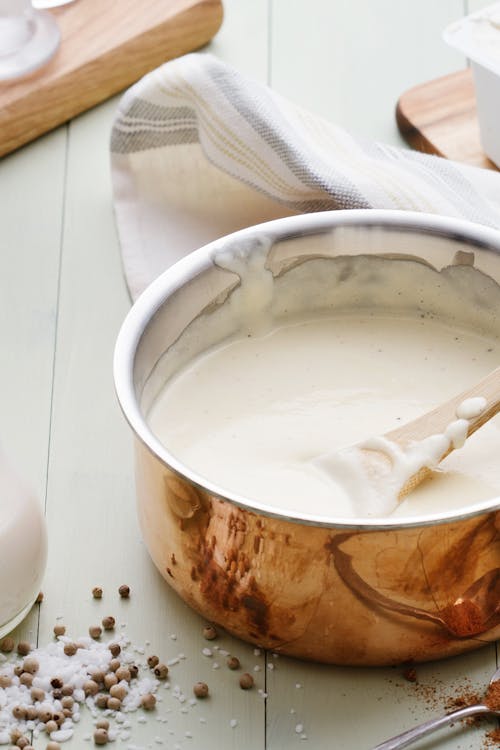
- Pour the mixture back into the saucepan and cook over low heat, stirring constantly with a spatula, until the custard thickens slightly and coats the back of a spoon. If using a thermometer, aim for approximately 175–180°F (79–82°C). Do not let the custard boil.
- Strain the custard through a fine-mesh sieve into a bowl. Stir in the butter until completely melted and incorporated. Cover and refrigerate until thoroughly chilled.
- In a clean, dry bowl, beat the egg whites with a pinch of salt until soft peaks form. Gradually add the powdered erythritol, a little at a time, and continue beating until the meringue forms glossy, stiff peaks.
- Bring a wide saucepan of water to a gentle simmer. Using two large spoons, shape the meringue into oval quenelles. Carefully lower them into the water and poach in batches for approximately 40 seconds per side. Keep the water at a gentle simmer rather than a rolling boil. Remove with a slotted spoon and drain on paper towels.
- Divide the chilled vanilla custard among four serving bowls. Gently place the poached meringue islands on top.
- Sprinkle with chopped almonds or a little ground cinnamon and serve.
Recipe tips and FAQs
What is floating island (île flottante)?
Île flottante, meaning "floating island" in French, is a classic French dessert made with delicate poached meringue served on a pool of vanilla custard, traditionally known as crème anglaise.
The airy meringue appears to float on the smooth custard, giving the dessert its name.
Traditional versions are sweetened with sugar and sometimes topped with caramel. This keto-friendly adaptation uses powdered erythritol instead, along with unsweetened coconut and almond milk.
What's the difference between île flottante and œufs à la neige?
The two desserts are very similar and the names are often used interchangeably.
Traditionally, œufs à la neige, or "snow eggs," refers to individual portions of poached meringue served with custard, while île flottante may refer to a larger meringue served in a similar way.
Today, both names are commonly used for this elegant combination of meringue and vanilla custard.
How do I prevent the custard from curdling?
The key is gentle heat and constant stirring.
When adding the warm milk to the egg yolks, pour it in gradually while whisking continuously. This process, called tempering, prevents the eggs from cooking too quickly.
Once the mixture is back in the saucepan, keep the heat low and stir constantly.
The custard should thicken enough to lightly coat the back of a spoon without becoming as thick as pudding.
If you have a kitchen thermometer, aim for approximately 175–180°F (79–82°C).
Avoid boiling, as excessive heat can cause the eggs to scramble.
What if my custard is too thin?
Crème anglaise is naturally thinner than pudding or pastry cream. It should have a smooth, pourable consistency that lightly coats the back of a spoon.
The custard will also thicken slightly as it cools.
If it seems too thin while cooking, continue stirring gently over low heat until it reaches the desired consistency.
Avoid increasing the heat too much, as this can cause the custard to curdle.
What if my custard becomes lumpy?
If the custard develops a few small lumps, immediately remove it from the heat and strain it through a fine-mesh sieve.
This can help remove small pieces of cooked egg and restore a smoother texture.
If the mixture has curdled significantly, however, straining may not fully restore the original consistency.
Should I use canned coconut milk or coconut milk from a carton?
Both can work, but canned coconut milk generally produces a richer, creamier custard because it contains more fat.
For the best texture, choose unsweetened full-fat canned coconut milk.
If using coconut milk from a carton, the custard may be slightly lighter and less creamy.
Always check the label to make sure the coconut milk and almond milk are unsweetened.
Can I replace the coconut milk?
Yes! If you prefer a more traditional vanilla flavor without coconut notes, replace the coconut milk with heavy whipping cream.
The combination of cream and unsweetened almond milk creates a rich, silky custard that works beautifully with the delicate meringue.
Keep in mind that changing the milk may affect the nutritional values.
Can I use a vanilla bean instead of vanilla extract?
Absolutely! A vanilla bean gives the custard a lovely, aromatic flavor and those characteristic little black specks.
Split the vanilla bean lengthwise and scrape out the seeds.
Add both the seeds and the pod to the milk while heating, then remove the pod before tempering the egg yolks.
Vanilla bean paste or vanilla extract also works well.
How do I get fluffy, stable meringue?
Start with a completely clean, dry mixing bowl and beaters. Even a small amount of fat or egg yolk can prevent the whites from whipping properly.
Beat the egg whites until soft peaks form before gradually adding the powdered erythritol.
Continue beating until the meringue is glossy and holds stiff peaks.
Avoid overbeating, as the meringue can become dry and grainy.
Powdered erythritol is preferable to granulated erythritol because it incorporates more easily into the egg whites, although the finished texture may still differ slightly from traditional sugar-based meringue.
How do I know when the meringue islands are cooked?
The meringue islands should feel softly set on the outside while remaining light and airy inside.
Poach them in gently simmering water for approximately 40 seconds per side, depending on their size.
Avoid boiling the water vigorously, as this can cause the delicate meringue to break apart.
For more consistent results, shape the islands into similar sizes and cook them in batches without overcrowding the saucepan.
Can I make the meringue islands in the oven instead?
Yes, although the texture will be slightly different.
For a more traditional soft texture, poaching is the preferred method.
If you choose to bake them, use a low oven temperature and watch carefully to avoid browning or drying them out.
Can I use a kitchen torch on the meringue?
Yes! Lightly torching the tops of the poached meringue islands adds a beautiful finishing touch and a subtle toasted flavor.
Use the torch briefly and keep it moving so the delicate meringue doesn't burn or collapse.
This step is completely optional.
Can I use a different sweetener?
A powdered keto-friendly sweetener that measures similarly to erythritol can work, but the results may vary.
Erythritol can recrystallize as it cools, especially in custards, and may give a slight cooling sensation.
Powdered sweetener helps create a smoother texture, but it does not eliminate these effects entirely.
If using another sweetener, check its sweetness and recommended conversion before substituting.
What toppings work well with floating island?
Chopped almonds add a lovely crunch that contrasts with the soft meringue and silky custard.
A light dusting of cinnamon is another simple option.
For a colorful finishing touch, try a few fresh raspberries, strawberries, or a small spoonful of unsweetened berry sauce.
You can also add a little grated dark chocolate or toasted coconut flakes.
Can I prepare floating island ahead of time?
Yes! This dessert is particularly convenient for entertaining because the custard can be prepared in advance.
Make the vanilla custard up to 2 days ahead and store it covered in the refrigerator.
The meringue islands are best prepared closer to serving time, as they can gradually release moisture and lose some of their airy texture during storage.
For the best presentation, assemble the dessert just before serving.
Is floating island keto-friendly?
Yes! This version replaces traditional sugar with powdered erythritol and uses unsweetened coconut and almond milk to keep the carbohydrate content low.
The eggs provide protein, while coconut milk and butter contribute richness.
Choose unsweetened milk alternatives and check the labels of vanilla paste and other ingredients, as some products contain added sugar.
The exact carbohydrate content will depend on the brands and sweeteners used.
Storage and leftovers
Store leftover vanilla custard in an airtight container in the refrigerator for up to 2 days.
Keep the poached meringue islands in a separate covered container in the refrigerator and use within 24 hours for the best texture.
If the meringue releases moisture, gently drain it before serving.
Assembled floating islands are best enjoyed fresh, as the meringue can soften and collapse over time.
Freezing is not recommended because both the custard and meringue may lose their delicate texture when thawed.