 , nutritional review by Jill Wallentin
 in Recipes, Dinner, Lunch, Meal
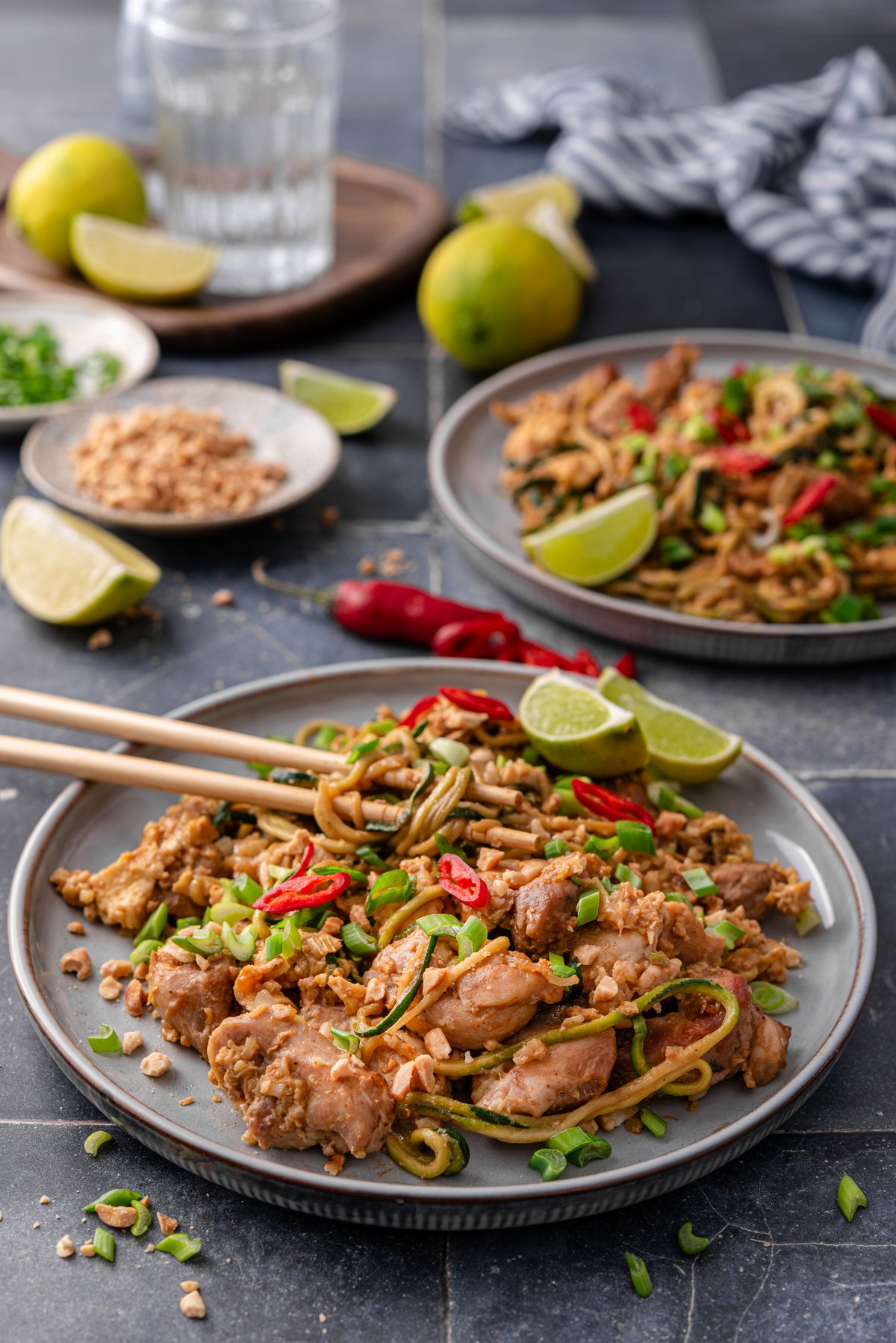
Low carb Pad Thai
Ingredients
- 1½ lbs 650 g boneless chicken thighs cut into strips or shrimp
- 1 lb 450 g zucchini spiralized into noodles
- 1 tsp 1 tsp salt for draining the zucchini
- 1 cup 240 ml cauliflower rice thoroughly dried
- 2 2 large egg lightly beaten with a pinch of saltlarge eggs lightly beaten with a pinch of salt
- 3 (1½ oz.) 3 (45 g) scallion sliced, white and green parts separatedscallions sliced, white and green parts separated
- 2 2 garlic clove mincedgarlic cloves minced
- ¼ cup 60 ml salted peanuts preferably unsalted, roughly chopped
- 2 tbsp 2 tbsp coconut oil or avocado oil
- 3 tbsp 3 tbsp tamari soy sauce or coconut aminos
- 2 tbsp 2 tbsp fish sauce
- 2 tbsp 2 tbsp peanut butter creamy unsweetened or almond butter unsweetened
- 3 tbsp 3 tbsp lime juice
- 1½ tbsp 1½ tbsp erythritol or another keto-friendly sweetener
- 3 tbsp 3 tbsp warm water
- 1 1 red chili pepper thinly slicedred chili peppers thinly sliced

Instructions
- Whisk together the tamari, fish sauce, peanut butter, lime juice, erythritol, and warm water in a small bowl until smooth. Set aside.
- Place the spiralized zucchini in a colander, sprinkle with salt, and toss gently. Let stand for approximately 10 minutes to release excess moisture. Gently squeeze out the liquid, then transfer the noodles to paper towels and pat dry.
- Heat half of the oil in a large skillet or wok over high heat. Add the chicken in a single layer and let it sear briefly before stirring. Cook for approximately 5-7 minutes, stirring occasionally, until browned and cooked through. Transfer to a plate.
- Reduce the heat to medium and add the remaining oil. Add the garlic and white parts of the scallions. Saute for approximately 30 seconds, until fragrant. Add the cauliflower rice and cook for 2-3 minutes, stirring occasionally, until slightly softened.
- Push the cauliflower rice to one side of the skillet. Pour the beaten eggs into the empty space and gently scramble until cooked. Stir the eggs into the cauliflower rice.
- Return the chicken to the skillet. Add the drained zucchini noodles and pour in the peanut sauce. Increase the heat to high and toss gently for 1-2 minutes, until everything is heated through and coated in the sauce. Avoid overcooking the zucchini noodles, as they can release excess moisture and become too soft.
- Remove from the heat and gently stir in half of the green parts of the scallions and half of the chopped peanuts. Divide among serving bowls and garnish with the remaining scallions, peanuts, and sliced red chili.
Recipe notes and tips
What is Pad Thai?
Pad Thai is one of Thailand's most famous dishes, traditionally made with stir-fried rice noodles, eggs, a protein such as chicken or shrimp, and a flavorful sauce made with tamarind, fish sauce, and palm sugar. It's typically garnished with crushed peanuts, lime, and fresh vegetables.
While delicious, traditional Pad Thai can be quite high in carbs due to the rice noodles and added sugar.
Our low carb version is inspired by the classic but swaps rice noodles for zucchini noodles and replaces the traditional sauce with a creamy, sugar-free peanut sauce. It's not an authentic Pad Thai, but it delivers a delicious combination of sweet, savory, tangy, and nutty flavors with fewer carbs.
Why use zucchini noodles instead of rice noodles?
Zucchini noodles, also called zoodles, are a great low carb alternative to traditional rice noodles.
They have a mild flavor that pairs beautifully with the bold peanut sauce and provide a lighter base for the chicken and vegetables.
Since zucchini contains a lot of water, it's important to drain the noodles before cooking and avoid leaving them in the hot skillet for too long.
How do I prevent watery zucchini noodles?
The key is removing as much excess moisture as possible before adding them to the skillet.
Sprinkle the spiralized zucchini with salt and let it rest in a colander for approximately 10 minutes. This draws out some of the water.
Gently squeeze out the moisture and pat the noodles dry with paper towels.
When cooking, add the zucchini noodles toward the end and toss them briefly over high heat. Overcooking can make them soft and watery.
Can I use shrimp instead of chicken?
Absolutely! Shrimp is a delicious alternative and works particularly well with the peanut and lime sauce.
Cook peeled, deveined shrimp in a hot skillet for approximately 2 minutes per side, depending on their size, until pink, opaque, and cooked through.
Transfer to a plate and return them to the skillet when adding the zucchini noodles and sauce.
Can I use another protein?
Yes! Thinly sliced beef or pork would also work well.
Adjust the cooking time depending on the protein you choose and make sure it is cooked through before combining it with the vegetables and sauce.
Can I use almond butter instead of peanut butter?
Yes! Unsweetened almond butter is a great alternative.
It creates a similarly creamy sauce with a slightly milder, less distinctly peanut-like flavor.
Choose a smooth variety without added sugar and adjust the amount of water if needed to reach your preferred consistency.
Why is cauliflower rice included?
Cauliflower rice adds extra vegetables and substance to the dish without significantly increasing the carb content.
It also helps distribute the sauce throughout the dish and makes the meal more filling.
For the best results, use finely chopped cauliflower rice and make sure it's relatively dry before adding it to the skillet.
Can I adjust the sweetness and acidity?
Absolutely! The sauce is inspired by the balance of sweet, salty, and sour flavors found in traditional Pad Thai, but you can easily adjust it to your taste.
Start with less erythritol if you prefer a more savory sauce, then taste and adjust before adding it to the skillet.
Add a little extra lime juice for more acidity or tamari for a deeper savory flavor. Keep in mind that fish sauce and tamari are both salty, so taste before adding any additional salt.
Can I make the sauce spicier?
Definitely! Add sliced fresh chili, chili flakes, or a little chili paste to the sauce.
You can also drizzle the finished dish with our sugar-free crispy chili oil for extra heat and flavor.
If using store-bought chili oil or chili crisp, check the label for added sugar.
Can I use coconut aminos instead of tamari?
Yes, coconut aminos can be used as an alternative to tamari.
However, coconut aminos are generally sweeter and contain more carbohydrates than tamari, so the nutritional values will change.
You may also want to reduce the sweetener in the sauce.
Can I prepare this recipe ahead of time?
You can prepare several components in advance to make cooking quicker.
Cut the chicken, spiralize the zucchini, chop the vegetables, and whisk together the sauce. Store everything separately in the refrigerator until ready to cook.
For the best texture, drain the zucchini and cook the dish shortly before serving.
Is this recipe good for meal prep?
Yes, although zucchini noodles are at their best freshly cooked.
If preparing several portions, consider storing the cooked chicken, cauliflower rice, and sauce separately from the raw zucchini noodles.
Reheat the chicken mixture first, then add the zucchini noodles and toss briefly until heated through.
This helps prevent the zucchini from becoming overly soft.
Storage and leftovers
Store leftovers in an airtight container in the refrigerator for up to 3–4 days.
Reheat gently in a skillet over medium heat until the chicken is thoroughly heated. Avoid prolonged cooking, as the zucchini noodles will continue to soften and release moisture.
The sauce may thicken in the refrigerator. Add a small splash of water when reheating if needed.