 , nutritional review by Jill Wallentin
 in Recipes, Dinner, Meal
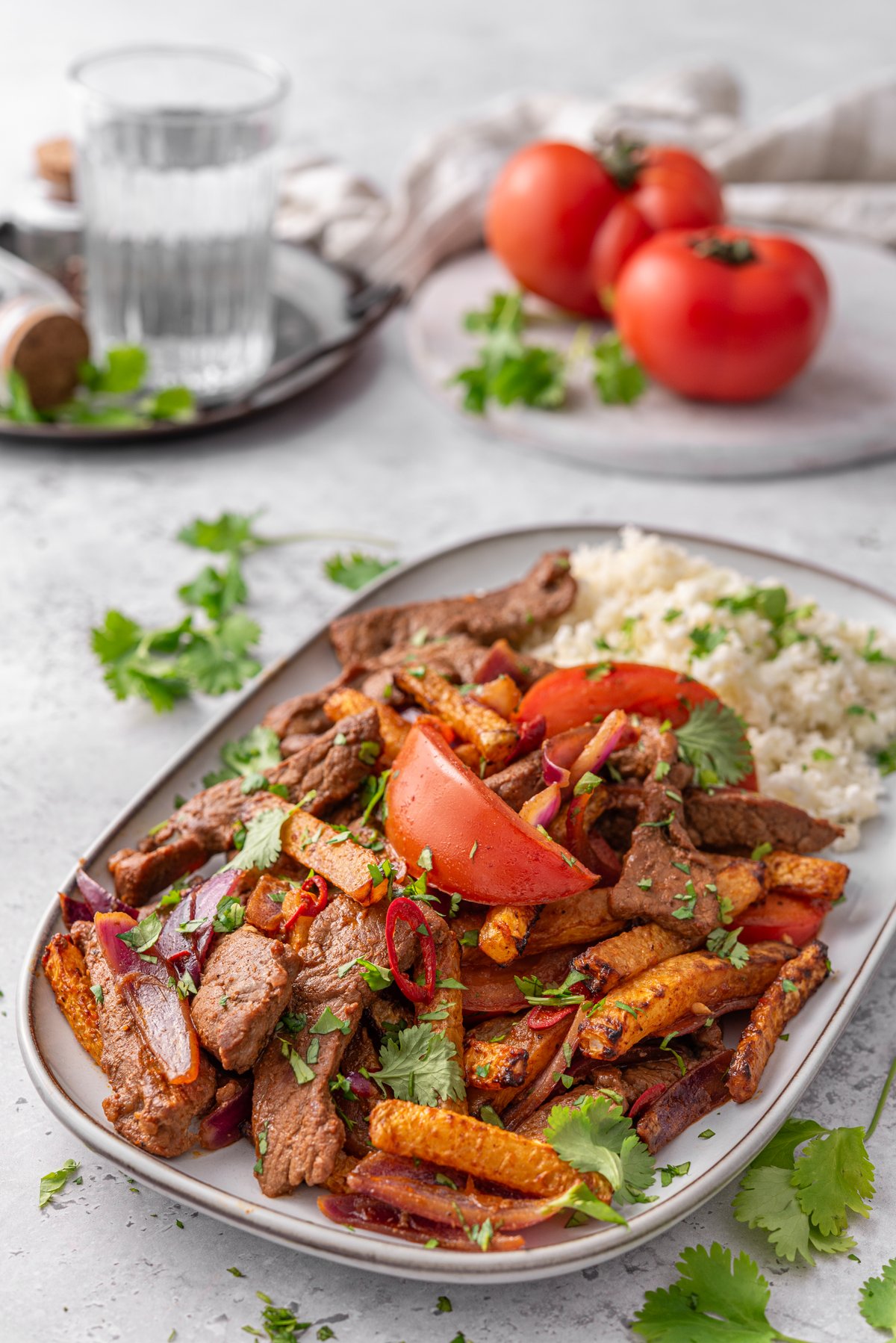
Low carb lomo saltado with kohlrabi fries
Ingredients
- 1 lb 450 g kohlrabi peeled and cut into 1/2-inch-thick (1 cm) sticks, or rutabaga, celeriac, carrots or zucchinikohlrabis peeled and cut into 1/2-inch-thick (1 cm) sticks, or rutabaga, celeriac, carrots or zucchini
- 2 tbsp 2 tbsp avocado oil
- 1 tsp 1 tsp paprika powder
- ½ tsp ½ tsp garlic powder
- salt to taste
- ground black pepper to taste
- 1¾ lbs 800 g sirloin steak, thinly sliced against the grainsirloin steaks, thinly sliced against the grain or ribeye steakribeye steaks
- 1 tsp 1 tsp salt
- ½ tsp ½ tsp ground black pepper
- 2 tbsp 2 tbsp avocado oil, divided
- ½ (2 oz.) ½ (55 g) red onion cut into thick wedgesred onions cut into thick wedges
- 1 1 small red chili pepper, seeds removed and thinly slicedsmall red chili peppers, seeds removed and thinly sliced
- 3 3 garlic clove mincedgarlic cloves minced
- 2 (8 oz.) 2 (230 g) tomato cut into wedges, watery seeds removedtomatoes cut into wedges, watery seeds removed
- ½ tbsp ½ tbsp chili paste preferably ají amarillo paste
- 3 tbsp 3 tbsp tamari soy sauce
- 1½ tbsp 1½ tbsp red wine vinegar
- 3 tbsp 3 tbsp butter cold, cubed
- 4 cups 950 ml cauliflower rice
- 2 tbsp 2 tbsp unsalted butter
- salt to taste
- ground black pepper to taste
- fresh cilantro chopped

Instructions
- Bring a large pot of salted water to a boil. Add the kohlrabi sticks and blanch for 3 minutes. Drain well and pat thoroughly dry with paper towels to remove excess moisture.
- Toss the kohlrabi with avocado oil, paprika, garlic powder, salt, and pepper. Arrange in a single layer in the air fryer basket and cook at 400°F (200°C) for 15-18 minutes, shaking halfway through, until tender with lightly crisp edges. Cook in batches if necessary.
- Pat the beef dry with paper towels and season with salt and pepper. Heat half of the avocado oil in a large skillet or wok over high heat until very hot. Working in batches, sear the beef in a single layer for about 1 minute without stirring, then toss for another 30 seconds. Transfer to a plate along with any accumulated juices.
- Add the remaining avocado oil to the same skillet. Stir-fry the red onion and chili for about 1 minute. Add the garlic, tomatoes, and ají amarillo paste. Cook for another 45 seconds, just until fragrant and the tomatoes begin to soften while retaining their shape.
- Return the beef and its juices to the skillet. Add the tamari and red wine vinegar, tossing for about 20 seconds until everything is evenly coated.
- Remove the skillet from the heat. Add the cold butter and toss until melted and incorporated into the pan juices, creating a rich, glossy sauce.
- Melt the butter for the cauliflower rice in a separate large skillet over medium heat. Add the cauliflower rice and cook for 5-7 minutes, stirring occasionally, until tender and most of the excess moisture has evaporated. Season with salt and pepper.
- Gently toss the kohlrabi fries with the beef mixture just before serving, allowing them to absorb some of the flavorful sauce.
- Divide the cauliflower rice among serving plates. Top with the beef stir-fry and kohlrabi fries, garnish with fresh cilantro, and serve immediately.
What is lomo saltado?
Lomo saltado is a popular Peruvian stir-fry that combines tender strips of beef with onions, tomatoes, chili, and a savory sauce. It's a delicious example of chifa, the Chinese-Peruvian culinary tradition that developed through Chinese immigration to Peru.
Traditionally, lomo saltado is served with French fries and white rice, combining Peruvian ingredients with Chinese-style high-heat stir-frying techniques.
Our low carb version swaps the potatoes for kohlrabi fries and the white rice for buttery cauliflower rice while keeping the dish's signature combination of juicy beef, vegetables, and tangy sauce.
What is ají amarillo?
Ají amarillo is a yellow-orange chili pepper widely used in Peruvian cooking. It has a distinctive fruity flavor and moderate heat, making it an important ingredient in many traditional Peruvian dishes.
Ají amarillo paste is available in some Latin American grocery stores and online.
If you can't find it, substitute another chili paste, or try a mixture of finely minced yellow bell pepper and jalapeño for a similar combination of sweetness and heat.
Which cut of beef works best?
Sirloin is an excellent choice because it becomes tender and flavorful when quickly seared over high heat.
Ribeye and flank steak also work well. Whichever cut you choose, slice it thinly against the grain to help keep the meat tender.
Avoid overcooking the beef. A quick sear is enough to develop flavor while keeping the inside juicy.
Why is high heat important?
Traditional lomo saltado is cooked quickly over very high heat, which gives the beef and vegetables their characteristic seared flavor.
Use a large skillet or wok and allow it to become very hot before adding the beef.
Cook the meat in batches to avoid overcrowding. Too much meat in the skillet lowers the temperature and causes the beef to steam instead of sear.
What can I use instead of kohlrabi?
Several vegetables work well as alternatives to kohlrabi, depending on your taste preferences and carb goals.
Rutabaga (swede): A slightly sweeter root vegetable that becomes tender when roasted or air-fried. It contains more carbs than kohlrabi but makes a satisfying alternative to traditional fries.
Celeriac (celery root): Has a mild, earthy flavor and a texture that works particularly well for fries. It's another good alternative, although its carb content varies depending on the variety and source.
Carrots: Naturally sweeter and higher in carbs than kohlrabi, but delicious when air-fried. They add a lovely color and sweetness to the dish.
Zucchini: A great choice if you want to keep the carb content particularly low. Cut it into thick sticks, skip the blanching step, and air-fry until tender and lightly browned. Zucchini contains more moisture, so the fries will be softer than those made with root vegetables.
Cooking times may vary depending on the vegetable and the thickness of the sticks.
Why use kohlrabi instead of potatoes?
Kohlrabi is a versatile, naturally low carb vegetable with a mild, slightly sweet flavor.
When cut into sticks and air-fried, it becomes tender inside with lightly crisp edges, making it a delicious alternative to traditional French fries.
Keep in mind that kohlrabi fries won't become quite as crispy as potato fries, but their texture works particularly well in this dish because they absorb the flavorful stir-fry sauce.
Do I need to blanch the kohlrabi first?
Blanching helps soften the kohlrabi before air-frying, giving the fries a more tender interior.
Make sure to drain and dry them thoroughly afterward. Excess moisture can prevent the edges from browning properly.
If using zucchini instead, skip the blanching step entirely.
Can I make the vegetable fries in the oven?
Yes! Spread the seasoned vegetable sticks in a single layer on a parchment-lined baking sheet.
Roast at 425°F (220°C) for approximately 20-25 minutes, turning halfway through, until tender and lightly browned.
Zucchini generally needs less time, so check it earlier to prevent overcooking.
Cooking times may vary depending on the vegetable, thickness, and your oven.
Can I make this recipe without an air fryer?
Absolutely! Roast the vegetable fries in the oven using the method above.
You can also pan-fry the vegetable sticks in a little avocado oil until tender and lightly browned, although the texture will be softer.
Can I use regular soy sauce instead of tamari?
Yes! Regular soy sauce works well if you don't need the recipe to be gluten-free.
Tamari is often gluten-free, but always check the label if avoiding gluten is important to you.
Choose a soy sauce or tamari without added sugar whenever possible.
Why add cold butter at the end?
Adding cold butter after removing the skillet from the heat helps create a smooth, glossy sauce that coats the beef and vegetables.
This technique, known as monter au beurre, adds richness and helps bring the pan juices together.
For the best results, add the butter gradually and toss gently until melted. Avoid boiling the sauce afterward, as it may separate.
Should I mix the fries into the beef?
Traditionally, French fries are often tossed directly into lomo saltado, allowing them to soak up some of the savory sauce.
We recommend doing the same with the kohlrabi fries just before serving.
If you prefer your fries to retain more of their lightly crisp edges, serve them alongside the beef instead.
Can I use something other than cauliflower rice?
Of course! The beef stir-fry and vegetable fries are delicious on their own, especially if you prefer a simpler meal.
You can also serve them with shredded cabbage, sauteed green beans, or another low carb vegetable.
Can I make lomo saltado ahead of time?
This dish is best served immediately, while the beef is juicy, the vegetables retain some bite, and the fries are freshly cooked.
However, you can slice the beef, prepare the vegetables, and cut the kohlrabi in advance.
The cauliflower rice can also be prepared ahead of time and reheated just before serving.
For the best texture, cook the beef and fries shortly before eating.
Storage and leftovers
Store leftovers in an airtight container in the refrigerator for up to 3-4 days.
For the best results, store the cauliflower rice separately from the beef and vegetable fries.
Reheat the beef gently in a skillet until thoroughly heated, adding a splash of water if necessary to loosen the sauce.
The vegetable fries can be reheated in the air fryer or oven, although they will soften once mixed with the sauce.