
Archive | Food
left
Egg beaters: The stupidest product in the world? 18
Why We Get Sick 14
Do You Want Ultrasound with Your Egg? 13
Death by McDonalds 47
What the Food Industry Didn’t Want to See 26
Why Americans are Obese: Nonfat Yogurt 17
Fat Phobia in Action 13
FatChance
The Book of the Year 20
Why Americans are Obese: Chocolate Milk 21
The Darkest Secrets of the Food Industry 3
How American Dietitians Sold Out to Coca Cola and Pepsi 23
How to Lose Weight, Part 3 of 17 10
right

The Darkest Secrets of the Food Industry

Do you want to know the darkest secrets of the food industry? Read the great new book Salt Sugar Fat, like I’m doing right now.

The author, Pulitzer prize-winner Michael Moss, was just on the Daily Show. Watch it above.

A short comment on the book: While it’s mostly great it’s also partly stuck in the failed dogma of yesterday. Natural saturated fat is still a villain. The main solution? FRUITANDVEGETABLES. Yawn. But if you ignore that the book is absolutely fascinating. Mostly for the insights we get into the minds of the people running the processed food industry.

Highly recommended: Salt Sugar Fat – How the Food Giants Hooked Us.

More: The Extraordinary Science of Addictive Junk Food

3

Hip-Hop Video Compares the Food Industry to Drug Dealers

Are food industry executives thinking and acting like drug dealers? Just a couple of days after I made that exact comparison here’s this video.

Before anyone mentions that the industry is just selling what people want, consider this from a blog post at TreeHugger:

This is usually where someone chimes in with arguments about freedom of choice, free markets and personal responsibility. And this is where the analogy between fast food and hard drugs becomes particularly useful. We don’t allow drug dealers to pedal crack cocaine for a very good reason – and we certainly don’t let them put up billboards, advertise to our kids, or lobby congress.

Freedom of choice does not work for people who are addicted. Although I would prefer to compare junk food addiction to smoking, rather than crack cocaine. That may be slightly over the top.

Is it a fair comparison? What do you think?

12

What if Wild Animals Ate Fast Food

Here’s what would happen if the water holes of the Serengeti were filled with Pepsi Cola.

5

The Extraordinary Science of Addictive Junk Food

the-extraordinary-science-of-junk-food

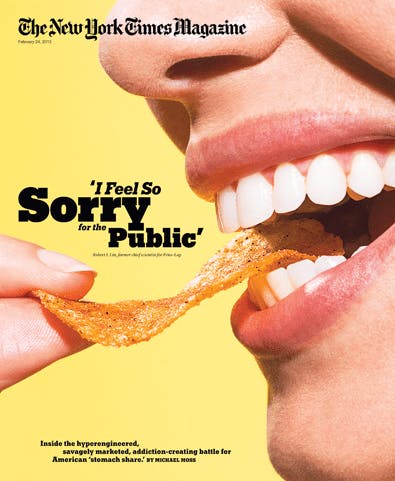
Here’s a great new article on how junk food is engineered to be addictive:

NYT: The Extraordinary Science of Addictive Junk Food

It’s perhaps nothing really new and the journalist is still stuck in old-fashioned failed ideas (sugar, salt and fat are equally bad). But the article gives great insights into the minds of the men running the junk food industry. Like this quote:

People could point to these things and say, ‘They’ve got too much sugar, they’ve got too much salt,’ ” Bible said. “Well, that’s what the consumer wants, and we’re not putting a gun to their head to eat it. That’s what they want. If we give them less, they’ll buy less, and the competitor will get our market. So you’re sort of trapped.”

You see the problem? Any junk food company trying to focus on healthy food (instead of focusing on making the junk food ever more addictive) risks being quickly eliminated. Any executive trying to do what’s right (and make less money) will likely be fired.

So what happens if the industry is left unregulated? It turns into a rapid evolution towards ever more addictive and ever less healthy junk food. It’s what’s been happening for a long time.

Here’s how a former Coca Cola executive was secretly thinking about expanding his market and making more money:

Dunn said. “How many drinkers do I have? And how many drinks do they drink? If you lost one of those heavy users, if somebody just decided to stop drinking Coke, how many drinkers would you have to get, at low velocity, to make up for that heavy user? The answer is a lot. It’s more efficient to get my existing users to drink more.”

I imagine that’s not too different from how any drug dealer thinks.

10

Good Night, Low-Fat Diet

Promise

Omega-6 margarine spread might just kill you

The old fear of natural saturated fat (such as butter) has been on its way out for a long time. Repeated reviews of science have in recent years not shown any evidence that eating butter is anything but healthy. In Sweden (where I live) lots of people have understood this and sales of skim milk, low-fat margarine and other low-fat products have plummeted.

Here is another nail in the coffin for the fat-phobia and the low-fat hysteria. A review of previously unpublished (hidden) numbers from an older study shows that today’s margarines may not only be unnecessary. They may be directly harmful to the heart.

A disaster

The study involved nearly 500 men with heart disease. Half of them were randomly assigned to increase polyunsaturated omega-6-fat intake, including in the form of margarine (similar to Promise light spread* in the US), and were advised to reduce saturated fat (such as butter). The other half was left alone and allowed to continue eating as before.

When the study was stopped after three years there were significantly more deaths in the group that consumed omega-6-rich margarine. The risk of dying during the study was elevated by a whopping 62%. Those who escaped counseling on margarine clearly lived longer.

Now it’s revealed that the risk of death from heart disease also was significantly elevated, by as much as 74%(!), in the group that was given margarine.

Good night, fat phobia

When you add this previously hidden disastrous result to all other studies that have been done, there isn’t the slightest evidence that omega-6-rich margarine is good for your heart. On the contrary: The numbers are very close to (p=0.06) showing a statistically significant harmful effect from this margarine. A probable increased risk of dying from heart disease as a result of consuming margarine instead of butter.

Adults can of course avoid buying the junk. But not all get to choose. Where I live potentially heart damaging omega-6-rich margarine is the only alternative allowed in many day care centers and schools, citing official fat-fearing dietary advice.

Time to wake up, official dietary guideline authorities?

More

From the British Medical Journal

*/ Promise light spread contains 1900 mg of omega-6 and only 300 mg of omega-3 per serving.

11

How American Dietitians Sold Out to Coca Cola and Pepsi

AND and Coca Cola

Sponsored by junk food

Do you trust what dietitians say in the media? Perhaps you shouldn’t. At least in the US the dietitian could have been educated by The Coca Cola Company.

I recommend reading this new report on the “unspeakably cozy relationship” between America’s largest association of nutrition professionals (AND) and Big Food. In short: AND have totally sold out to Coca Cola, Pepsico as well as candy manufacturers (like Mars foods). In return for money and influence Big Food is allowed to, for example, produce educational material and accredited education for the dietitians of America.

So when your dietitian says that it’s all about eating a balanced diet (including soda and candy) and exercising more, that could be arguments taught to him or her by Pepsico.

More

Weighty Matters: Author Michele Simon’s Devastating Report on the Academy of Nutrition and Dietetics’ Corporate Ties

Food Politics: New study: Big Food’s ties to Registered Dietitians

23

The Book of the Year

FatChance

It’s out. The book “Fat Chance” by professor Robert Lustig, the man who made millions of people watch a 90 minutes long lecture on nutrition (“Sugar, The Bitter Truth”). Lustig has the ability to make a subject exciting and his message could not be more important.

I’m reading the book right now and I’ll return with a more thorough review. But I want to tell you right now. While it’s only January 5th and while I haven’t yet finished the first read-through I’m already certain: This is the book of the year.

Do you want to know:

  • Why a calorie is not a calorie?
  • Why obesity is not about gluttony or sloth?
  • What the real problem is with sugar and processed food?
  • The cause of the epidemics of obesity and related diseases?

Here’s the answer (it starts with the letter “i”) in a fascinating read and with a concluding list of scientific references that should make the most inveterate critic give up.

Read the first pages for free on Amazon.com.

20

What the Food Industry Didn’t Want to See

So the food industry invited a doctor to give a talk at an industry breakfast. But three days before the talk, with his flights and hotels booked, they cancelled his talk. Why?

Well, I guess they suddenly realized that they had invited the wrong person. Dr Yoni Freedhoff is no fan of the food industry. Having already prepared his 13 minutes talk he recorded it and uploaded it to YouTube two days ago. Number of views so far: 160 000.

It’s a great talk. See it. Share it.

26

Fat Blocking Pepsi and Other Silliness

Have you seen the reports on the new “Pepsi Special”, about to go on sale in Japan? It’s marketed as a “fat blocker” and according to the TV-commercials you can now eat all the junk food you want – as long as you drink the Pepsi.

Pepsi apparently believes that Japanese consumers are gullible.

The new additive in this Pepsi is dextrin, a soluble fiber. Added fiber in soda can in the best case scenario result in marginally increased satiety (if you trust the processed food-industry’s investigations), increase bloating and slow absorption of nutrients somewhat. It’s like putting filters on cigarettes.

A fiber-Pepsi hardly protects you from obeity at McDonalds better than sprinkling some sawdust over your french fries. The difference is marginal (if it’s even noticable). Filters on cigarettes didn’t stop them from giving people lung cancer either.

11

Like Rats in a Sugar Labyrinth

I just arrived in Cape Town, South Afrika. A beautiful place and great weather, which is a welcome change coming from wintery Sweden. Pictured above is the first store I went to, actually a very nice one.

Here’s the last part before the checkout counters. Have you seen anything like it? I’m used to all the candy close to the counters back home. But I’ve never had to navigate a sugar-filled maze (soda! chocolate! cookies!) to reach the exit. I’m glad I didn’t have a child with me.

I felt a bit like a rat in an experiment. Have you seen anything like it?

32